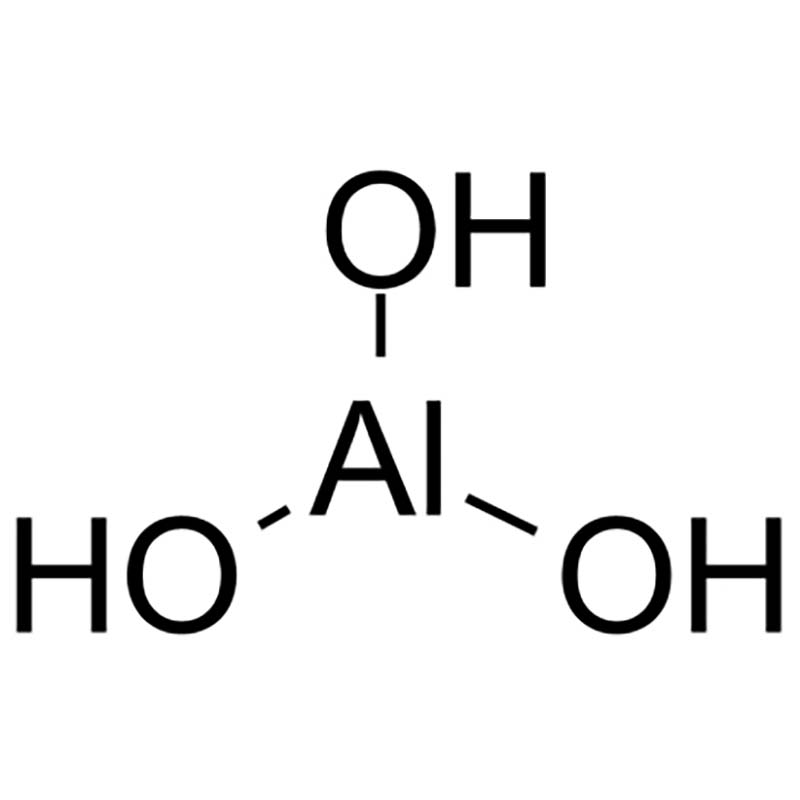
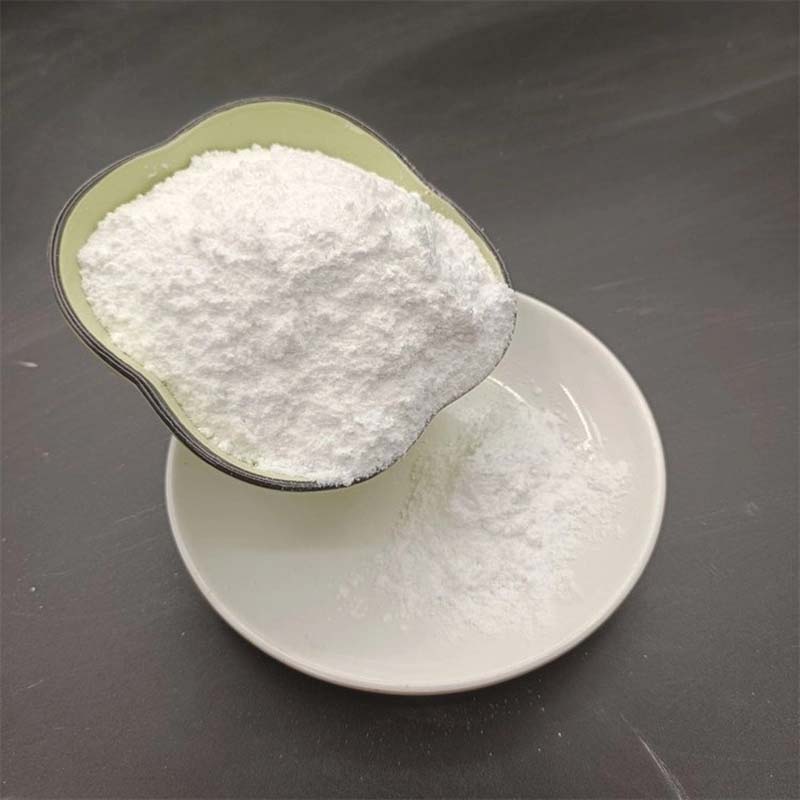
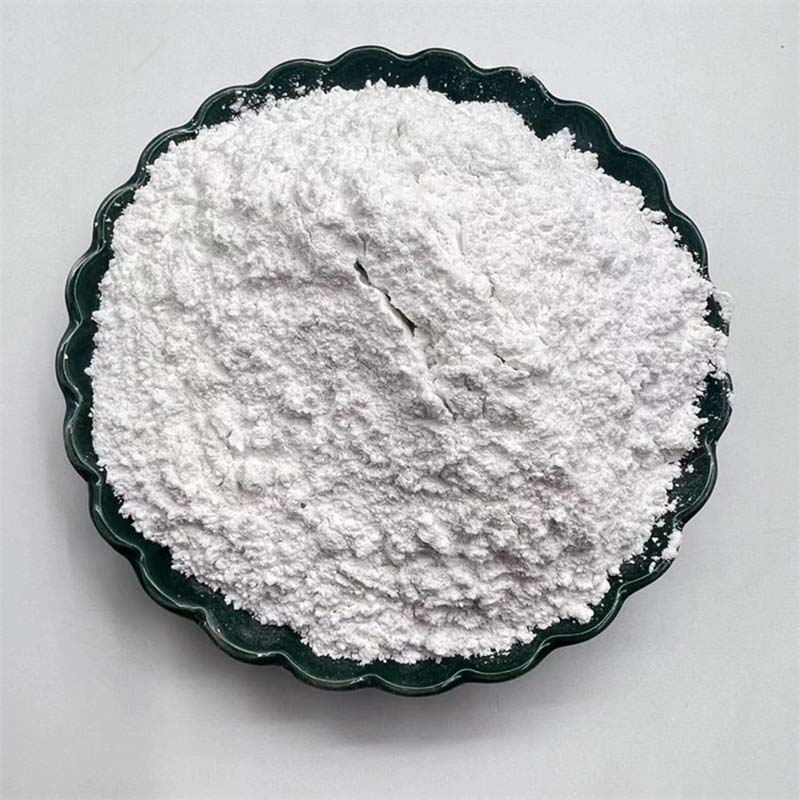
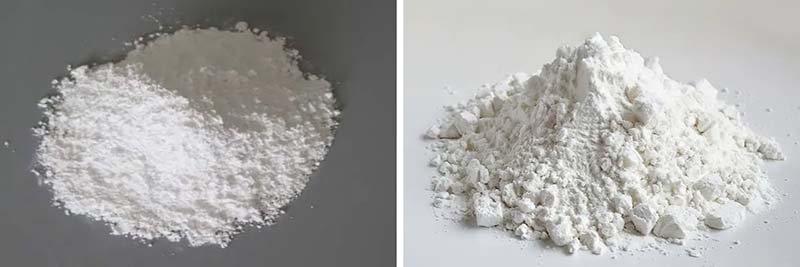
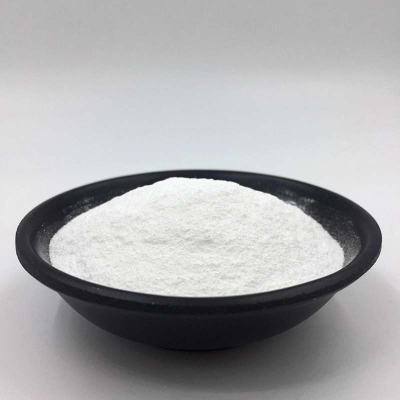
Aluminum hydroxide (Al(OH)3) is a white solid, aluminium hydroxide exists as a white solid powder. It fails to dissolve in water but displays good solubility in acid and alkaline solvents, categorizing it as a representative amphoteric hydroxide.
If heated in open air, it will lose internal crystal water through dehydration and convert into aluminium oxide, an intermediate material that occupies a core position in alumina production workflows.
This compound can react with acids and strong bases separately, yielding inorganic salt products and water after each reaction, which fully validates its dual acid-base amphoteric traits.
Owing to its faint acidic nature, people sometimes refer to it as aluminic acid, marked as H₃AlO₃ chemically. In practical neutralization reactions with alkalis, however, the actual generated ion is tetrahydroxyaluminate, with the notation [Al(OH)₄]⁻.
For this reason, researchers normally classify it as monohydrate aluminic acid (HAlO₂·H₂O). According to distinct application fields, the product is split into two main grades: industrial aluminium hydroxide and pharmaceutical aluminium hydroxide.

| Item | Specifications |
| Melting point | 300℃ |
| Boiling point | 2980℃ (101325 Pa) |
| Bulk density | ~90 g/100 mL |
| Density | 2.42 g/cm³ (20 ℃) |
| Vapor pressure | <0.1 hPa (20 ℃) |
| <0.1 hPa (20 ℃) | Average: 1.57–1.59 |
| Storage | Keep at 5–30 ℃ |
| Water solubility | 0.0015 g/L, insoluble |
| Appearance | White colloidal suspension |
| Specific gravity | 2.42 |
| Odor & Taste | Odorless |
| pH | 8–9 (100g/L slurry, 20℃) |
| Indicator color shift pH | Above 7 |
| Crystal type | Monoclinic |
| Merck index | 14,342 |
| pKsp | 32.89 |
| Exposure limit | ACGIH TWA 1 mg/m³ |
| Dielectric constant | 2.2 (ambient) |
| Stability | Stable; incompatible with strong alkalis |
| Primary use | Small-molecule pharmaceutical raw material |
| Cosmetic functions | Skin conditioning, emollient, opacifier, humectant, skin protector, viscosity regulator, colorant |
| Cosmetic identity | Aluminum hydroxide, CAS 21645-51-2 |
| InChI | 1S/Al.3H2O/h;3*1H2/q+3;/p-3 |
| InChIKey | WNROFYMDJYEPJX-UHFFFAOYSA-K |
| SMILES | OAlO |
| LogP (estimated) | -1.380 |
| CAS registry | 21645-51-2 |
| EPA substance ID | Aluminum hydroxide (21645-51-2) |
Application Scenarios of Aluminium Hydroxide
1. Feedstock for Chemical Synthesis
Aluminium hydroxide supports mass manufacturing with abundant supply sources, high purity grade, and excellent dissolving performance in both acidic and alkaline solutions. It serves as a core precursor to synthesize various aluminium salts, including barium aluminate and aluminium sulfate.
2. Environment-Friendly Flame Retardant Filler
Fine aluminium hydroxide powder acts as a premium multifunctional filler for plastics, unsaturated polyester resin, rubber and other organic polymer products. It combines filling, fire resistance and smoke suppression features while remaining non-poisonous.Its fire-resistant principle relies on strong endothermic decomposition once ambient temperature rises above 200°C; the reaction peaks near 250°C, where three crystal water molecules separate out. This heat-absorbing process slows the temperature rise of polymer substrates and delays their thermal breakdown. Only water vapor releases during decomposition, with no poisonous fumes produced. 3. Ceramic Manufacturing Raw Material
After high-temperature calcination, aluminium hydroxide converts into alumina, a substance featuring outstanding thermal stability, mechanical strength, rheological resistance, dielectric performance and low thermal expansion. It is an indispensable raw material for ceramic fabrication. Within sintering procedures, it triggers and regulates crystal growth, enabling precise modulation of composite material crystalline phases.
4. Wastewater Purification Agent
Dissolved aluminium hydroxide mainly exists as tetrahydroxyaluminate ions in aqueous environments. Via co-precipitation reactions, these ions bind toxic heavy metal pollutants in wastewater, which can later be filtered out to purify water bodies. Its large specific surface area also enables strong adsorption of colloids, suspended particles, pigment dyes and organic contaminants.
5. Pharmaceutical Field Material
As a mild antacid, aluminium hydroxide neutralizes excess gastric acid without toxic side effects, making it a classic remedy for gastric illnesses. Besides clinical stomach treatment, it works as a vaccine adjuvant: it adsorbs antigen molecules on its surface to realize sustained slow release, extending pharmaceutical efficacy duration and boosting vaccine immunogenicity.
6. Catalyst Support Medium
By adjusting synthesis parameters including temperature, reactant concentration and pH value, aluminium hydroxide products with customized surface area, pore capacity, pore architecture and crystal morphology can be fabricated. These tailored varieties function as reliable catalyst carriers for unsaturated carbonyl hydrogenation and fullerene synthesis.
7. Papermaking Coating Additive
Boasting superior whiteness, ultrafine grain size, intact crystal shape and great compatibility with whitening additives, aluminium hydroxide is widely added to paper coatings and resin mixtures. It remarkably upgrades coated paper’s whiteness, opacity, surface smoothness and ink absorption capacity.