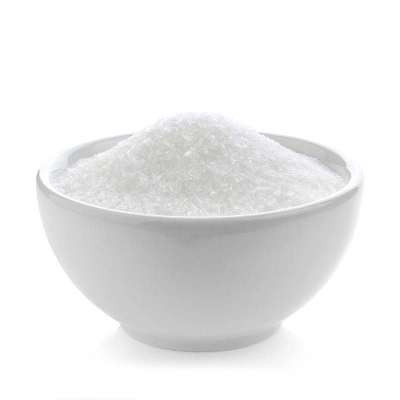


Aluminum hydroxide
Superior Flame Retardancy: Demonstrates exceptional fire suppression through endothermic decomposition (1.17 kJ/g), effectively inhibiting flame propagation and smoke generation while complying with UL 94 V-0 standards.
High Purity and Versatility: Exhibits tunable morphological characteristics (1-80 μm) for applications in ceramic manufacturing, catalytic systems, and pharmaceutical formulations, with purity levels exceeding 99.8%.
Effective Environmental Remediation: Achieves fluoride removal at a capacity of 15 mg/g and facilitates acid mine drainage neutralization, supporting water purification efforts.
Pharmaceutical-Grade Safety: Functions as a non-toxic antacid and vaccine adjuvant via NLRP3 inflammasome activation, ensuring biocompatibility.
Controlled Thermal Conversion: Acts as a precursor for synthesizing high-performance gamma-alumina (γ-Al₂O₃), enabling applications in industrial catalytic processes.
Aluminum hydroxide (chemical formula Al(OH)₃) presents as a white crystalline powder characterized by its water insolubility yet demonstrating ready solubility in both acidic and alkaline media, consistent with amphoteric hydroxide behavior. Upon thermal treatment in air, it undergoes dehydration to yield aluminum oxide, establishing its industrial significance in alumina production.
This compound exhibits typical amphoteric properties, reacting with acids to form corresponding salts and water, while similarly interacting with strong bases to generate soluble aluminate compounds. Owing to its weakly acidic characteristics, it may be alternatively described as aluminic acid (H₃AlO₃). In practical reactions with bases, it predominantly forms tetrahydroxyaluminate anions ([Al(OH)₄]⁻). Thus, it is more accurately represented as aluminum hydroxide monohydrate (HAlO₂·H₂O) in chemical contexts.

Advanced Technical Parameters
Property | Technical Specification |
BET Surface Area | 3-40 m²/g (adjustable via precipitation) |
Oil Absorption | 45-65 mL/100g |
Dielectric Constant | 6.5-7.2 (1 MHz) |
Decomposition Temp | 180°C (onset), 300°C (complete) |
Particle Morphology | Hexagonal platelets (1-80 μm), spherical nanoforms |

Industrial Applications & Innovations
Advanced Flame Retardancy
Mechanism: The endothermic decomposition reaction (ΔH: 1.17 kJ/g) releases water vapor, reducing smoke emission by over 60%
Formulations: Enables UL 94 V-0 compliant composites when incorporated at 60-65% loading in EVA cable formulations
Pharmaceutical Engineering
Antacid: Neutralizes gastric acid with minimal CO₂ generation, maintaining pH 6.5-7.5
Vaccine Adjuvant: Augments antigen presentation through NLRP3 inflammasome pathway activation
Ceramic & Catalysis
Catalyst Carrier: High-purity grades (>99.8%) utilized in hydrodesulfurization catalysts
Advanced Ceramics: Serves as precursor for transparent alumina ceramics achieving >80% in-line transmittance at 640 nm
Environmental Remediation
Fluoride Removal: Demonstrates adsorption capacity reaching 15 mg/g at pH 5.5
Acid Mine Drainage: Effectively neutralizes sulfuric acid while immobilizing heavy metals through precipitation
Packaging & Logistics
Packaging Specifications: Utilizes triple-layer corrugated fibreboard containers (25 kg capacity) and polyethylene-lined flexible intermediate bulk containers (1,000 kg capacity), with ISO tank containers for liquid transport
Storage Stability: Maintains product integrity for 24 months when stored below 30°C with relative humidity under 50%, requiring protection from atmospheric carbon dioxide
Safety Handling: Classified under IMDG Code Class 9 (Not Otherwise Restricted) with dust explosion hazard rating St-1 (Kst < 200 bar·m/s), conforming to IMO SP 340 standards for combustible dust transport
Aluminum Hydroxide (Al(OH)₃) is a versatile inorganic substance generally obtained as a white crystalline powder exhibiting a Mohs hardness of 2.5-3.5. Its negligible aqueous solubility (<0.1 mg/mL at 20°C) stands in contrast to its pronounced reactivity in both acidic and alkaline environments, demonstrating characteristic amphoteric behavior. Through thermal decomposition above 200°C, the compound undergoes progressive dehydration to yield gamma-alumina (γ-Al₂O₃), constituting the principal raw mate