


Ascorbic Acid
Prevents Scurvy: Vitamin C prevents the onset of scurvy through its essential biochemical functions, with deficiency directly leading to this pathological condition.
Potent Antioxidant Activity: It functions as an effective antioxidant, safeguarding cellular components against oxidative deterioration and mitigating oxidative stress.
Essential Cofactor Function: Vitamin C serves as an indispensable cofactor for numerous enzymatic processes, particularly in collagen biosynthesis and immune system regulation.
Aqueous Solubility: Demonstrates high water solubility, which facilitates efficient intestinal absorption and systemic distribution in biological systems.
1. Product Overview
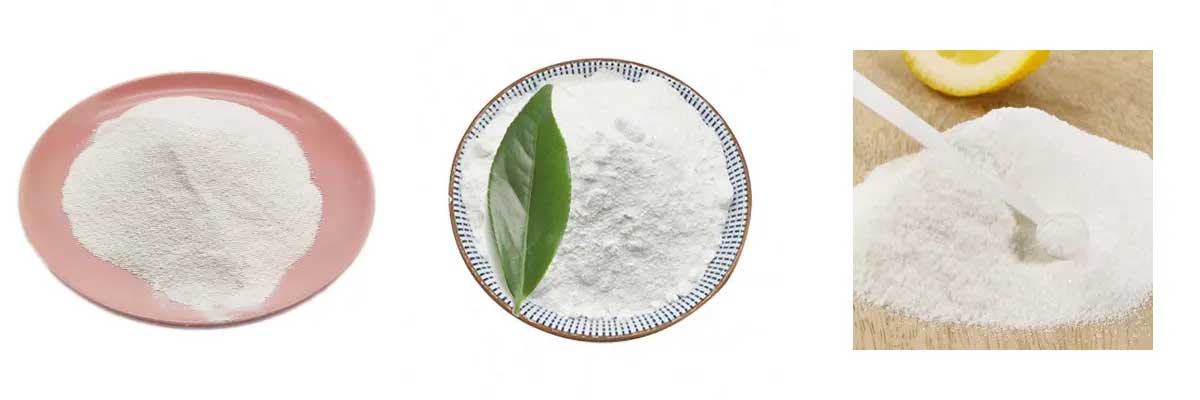
Ascorbic acid, commonly known as Vitamin C, is an essential water-soluble vitamin with potent antioxidant properties. It is a naturally occurring organic compound found abundantly in citrus fruits, vegetables, and various plant sources . Its chemical formula is C₆H₈O₆ with CAS number 50-81-7 and molecular weight of 176.12 g/mol . The product typically appears as a white to pale yellow crystalline powder, odorless with a sharp acidic taste .
Ascorbic acid is a vital nutrient that humans cannot synthesize endogenously and must obtain from dietary sources or supplementation . It plays a fundamental role in numerous biological processes, including collagen synthesis, immune function, and as a reducing agent in various metabolic pathways .
Industrially, ascorbic acid is produced through both traditional fermentation-based methods (Reichstein process) and modern flow synthesis techniques . It serves as a critical ingredient across multiple industries—from food preservation and fortification to pharmaceutical applications, cosmetic formulations, and biochemical research .
2. Key Features
Essential Human Nutrient: Humans cannot synthesize ascorbic acid and must obtain it through diet or supplementation . It is essential for preventing scurvy and maintaining overall health .
Powerful Antioxidant Properties: Exhibits strong free radical scavenging activity, protecting cells from oxidative damage and reducing oxidative stress in biological systems .
Enzymatic Browning Inhibitor: Effectively prevents enzymatic browning in fresh fruits and vegetables by reducing quinones back to phenolic compounds and inactivating polyphenol oxidase enzymes .
Versatile Therapeutic Applications: Demonstrates potential benefits in multiple clinical areas including oral health, periodontal disease management, and as an adjunctive cancer therapy at high doses .
High Pharmaceutical Purity Standards: Available in multiple pharmacopoeia grades (USP, EP) with strict quality specifications for pharmaceutical and food applications .
Multi-Industry Essential:
Pharmaceutical: API in vitamin supplements, antioxidant in formulations
Food Industry: Preservative (E300), nutrient fortification, anti-browning agent
Cosmetics: Skin brightening, anti-aging, collagen synthesis promoter
Research: Cell culture, biochemical assays, antioxidant studies
3. Technical Specifications with Explanations
| Parameter | Typical Value/Specification | Description & Significance |
|---|---|---|
| Molecular Formula | C₆H₈O₆ | Core identifier; a lactone with an enediol structure responsible for antioxidant activity . |
| Molecular Weight | 176.12 g/mol | Used for quantitative analysis and formulation calculations . |
| CAS Number | 50-81-7 | Universal chemical identifier . |
| EINECS Number | 200-066-2 | European inventory identifier . |
| Appearance | White to pale yellow crystalline powder | Visual quality indicator; should be free from discoloration or visible impurities . |
| Odor | Odorless | Sensory characteristic . |
| Assay (Purity) | ≥99.0% – ≥99.5% (grade dependent) | Core specification. Higher purity critical for pharmaceutical and food applications . |
| Melting Point | 190 – 194 °C (decomposes) | Characteristic physical constant; decomposition occurs upon heating rather than true melting . |
| Specific Optical Rotation | [α]D/20° +20.5° to +21.5° | Measures stereochemical purity; L-isomer is the biologically active form . |
| Solubility in Water | ~330 g/L (20°C) | Highly water-soluble, facilitating easy incorporation into aqueous formulations . |
| Solubility in Organic Solvents | Slightly soluble in alcohol; insoluble in ether, chloroform, benzene | Limited organic solubility requires aqueous systems for dissolution . |
| pH (5% solution) | 2.2 – 2.5 | Acidic nature requires consideration in formulation stability . |
| Loss on Drying | ≤ 0.4% | Measures moisture content; critical for stability and accurate weighing . |
| Residue on Ignition | ≤ 0.1% | Represents inorganic impurity content; low value indicates high purity . |
| Heavy Metals (as Pb) | ≤ 10 ppm | Critical safety parameter ensuring regulatory compliance . |
| Iron (Fe) | ≤ 2 ppm | Iron catalyzes oxidation; low content essential for stability . |
| Copper (Cu) | ≤ 5 ppm | Copper catalyzes degradation; must be controlled . |
| Oxalic Acid | ≤ 0.2% | Controls degradation product; ensures quality . |
| Storage Temperature | 2-8°C (pharmaceutical standards) , 15-25°C (general) | Cool storage recommended to prevent degradation . |
| Stability | Sensitive to light, heat, air, and moisture; degrades in aqueous solutions | Requires protected storage; solutions should be used promptly . |
Pharmacopoeia Standards Comparison
| Parameter | USP Grade | EP Grade | Food Grade (FCC) |
|---|---|---|---|
| Assay | 99.0-100.5% | 99.0-100.5% | 99.0-100.5% |
| Specific Rotation | +20.5° to +21.5° | +20.5° to +21.5° | +20.5° to +21.5° |
| Loss on Drying | ≤0.4% | ≤0.4% | ≤0.4% |
| Residue on Ignition | ≤0.1% | ≤0.1% | ≤0.1% |
| Heavy Metals | ≤10 ppm | ≤10 ppm | ≤10 ppm |
| Lead (Pb) | ≤2 ppm | ≤2 ppm | ≤2 ppm |
4. Applications
Pharmaceutical & Healthcare
Vitamin Supplementation: Primary ingredient in oral vitamin C supplements (tablets, capsules, chewables, powders) for preventing and treating deficiency .
Therapeutic Applications:
Oral Health: Adjunctive therapy for periodontal diseases, reducing bleeding on probing, plaque index, and gingival index . Accelerates alveolar healing after tooth extraction .
Cancer Research: High-dose vitamin C demonstrates potential anti-tumor capabilities in various cancer treatment modalities including chemotherapy, radiotherapy, and immunotherapy .
Wound Healing: Essential for collagen synthesis and tissue repair .
Parenteral Nutrition: Component in intravenous vitamin formulations .
Antioxidant in Pharmaceutical Formulations: Prevents oxidation of active ingredients and excipients .
Food & Beverage Industry
Antioxidant (E300) : Prevents oxidative rancidity in oils, fats, and processed foods .
Enzymatic Browning Inhibitor: Highly effective in preventing browning of fresh-cut fruits and vegetables by:
Reducing quinones back to phenolic compounds
Inactivating polyphenol oxidase (PPO) enzymes
Acidifying the medium to inhibit enzyme activity
Nutrient Fortification: Added to beverages, juices, cereals, dairy products, and infant formula to enhance nutritional value .
Flour Treatment Agent: Improves bread quality by strengthening gluten .
Beverage Stabilizer: Precludes oxidation and color changes in soft drinks, fruit juices, and beers .
Meat Processing: Enhances color stability and prevents nitrosamine formation .
Cosmetics & Personal Care
Skin Brightening: Inhibits melanin production by interfering with tyrosinase activity .
Anti-Aging: Promotes collagen synthesis, reducing fine lines and wrinkles .
Antioxidant Protection: Neutralizes free radicals from UV exposure and environmental pollutants .
Product Stabilization: Prevents oxidation of other cosmetic ingredients .
Typical Formulations: Serums, creams, lotions, masks, and eye treatments .
Research & Biotechnology
Cell Culture Media: Essential component for many cell lines .
Biochemical Assays: Reducing agent in enzymatic and colorimetric assays .
Antioxidant Studies: Model compound for oxidative stress research .
Plant Science: Studies on plant vitamin C biosynthesis and function .
Industrial Applications
Photographic Processing: Reducing agent in developing solutions .
Chemical Synthesis: Reducing agent and intermediate in organic synthesis .
Water Treatment: Oxygen scavenger in boiler water treatment .
5. Product Grade Comparison
| Parameter/Grade | Food Grade (FCC) | Pharmaceutical Grade (USP/EP) | High Purity (≥99.5%) | Analytical Standard |
|---|---|---|---|---|
| Core Standard | Meets Food Chemical Codex | Meets USP/EP pharmacopoeia standards | Exceeds pharmacopoeia requirements | ≥99.9% for precise analysis |
| Purity (Assay) | 99.0-100.5% | 99.0-100.5% | ≥99.5% | ≥99.9% (HPLC) |
| Appearance | White to pale yellow crystals | White crystalline powder | White crystalline powder | White powder |
| Critical Parameters | Heavy metals, lead, loss on drying, residue on ignition | Specific rotation, heavy metals, iron, copper, oxalic acid | Ultra-low trace metals, particle size control | Exact content, chromatographic purity |
| Microbiological Limits | Standard food-grade limits | Strict pharmacopoeia limits | Low bioburden | Not applicable |
| Primary Applications | Food fortification, beverages, processed foods, antioxidant E300 | Pharmaceutical tablets/capsules, injectables, clinical nutrition | Premium cosmetics, research, sensitive formulations | HPLC calibration, quantitative analysis, reference standard |
| Packaging | 25 kg bags/drums | 1 kg, 5 kg, 25 kg sealed containers | 100 g, 500 g, 1 kg under inert atmosphere | 100 mg, 1 g vials |
| Storage Temperature | 15-25°C, cool dry place | 2-8°C recommended , 15-25°C acceptable | 2-8°C, protected from light | 2-8°C, sealed |
6. Purchasing & Selection Guide
Select by Application Area
Food & Beverage Manufacturers:
Standard powder: General purpose
Fine powder: Quick dissolution in beverages
Coated grades: Enhanced stability in challenging matrices
Select Food Grade (FCC) meeting local regulations
Verify purity (99.0-100.5%) and heavy metals compliance
Consider particle size for specific applications:
For anti-browning applications, note that ascorbic acid is highly effective at preventing enzymatic browning, but may require combination with synergists for optimal results
Pharmaceutical Manufacturers:
Certificate of Analysis with full impurity profile
Drug Master File (DMF) access
cGMP manufacturing certification
Must select Pharmaceutical Grade (USP/EP) meeting pharmacopoeia standards
Require comprehensive documentation:
Verify specific optical rotation (+20.5° to +21.5°) ensures correct stereoisomer
Confirm heavy metals (≤10 ppm) and trace metals (Fe, Cu) meet specifications
Storage: Pharmaceutical grade requires 2-8°C storage to maintain stability
Cosmetic Manufacturers:
Select High Purity Grade (≥99.5%) with strict color and odor specifications
Consider microencapsulated or stabilized forms for enhanced stability in aqueous formulations
Verify compatibility with other ingredients
Note: Ascorbic acid is pH-sensitive and degrades rapidly in aqueous solutions
Research Laboratories:
Pharmaceutical Grade: For cell culture and biochemical assays
Analytical Standard: For HPLC calibration and quantitative analysis
High Purity: For sensitive research applications
Critical Selection Considerations
Stability Concerns:
Ascorbic acid is sensitive to light, heat, air, and moisture
Degrades rapidly in aqueous solutions, especially at neutral pH
Solutions should be prepared fresh and used promptly
Consider stabilized derivatives (sodium ascorbate, calcium ascorbate, ascorbyl palmitate) for challenging formulations
pH Considerations:
5% solution pH is 2.2-2.5 (acidic)
May require pH adjustment in formulations
Acidic nature can affect stability of other ingredients
Regulatory Status:
Food: Approved worldwide as E300
Pharmaceutical: Listed in USP, EP, JP, and other pharmacopoeias
Nutrient Reference Values: RDA varies by population (typically 40-120 mg/day)
7. Frequently Asked Questions (FAQ)
Q: What is the difference between L-ascorbic acid and ascorbic acid?
A: They are the same compound. L-ascorbic acid specifies the naturally occurring, biologically active stereoisomer. The L- designation refers to the configuration around the asymmetric carbon, which is essential for biological activity. Synthetic ascorbic acid is chemically identical to the natural L-form.
Q: How is ascorbic acid produced commercially?
A: Traditional production uses the Reichstein process, a combined chemical and microbial method developed in 1933 . Key steps include:
Hydrogenation of D-glucose to D-sorbitol
Microbial oxidation of sorbitol to L-sorbose
Protection, oxidation, and lactonization steps to yield ascorbic acid
Modern methods include direct oxidation with platinum catalysts and newer flow synthesis approaches that achieve conversion in minutes with high yields .
Q: Is ascorbic acid stable in aqueous solutions?
A: No, ascorbic acid is unstable in aqueous solutions, particularly at neutral or alkaline pH. It undergoes oxidative degradation accelerated by:
Light exposure
Elevated temperatures
Presence of oxygen
Metal ions (iron, copper)
Solutions should be prepared fresh and used promptly. For extended stability, consider using stabilized derivatives or incorporating antioxidants and chelating agents.
Q: What are the main health benefits of ascorbic acid?
A: Key health benefits include:
Collagen synthesis: Essential for skin, blood vessels, bones, and wound healing
Immune function: Supports various immune cell functions
Antioxidant protection: Neutralizes free radicals and reduces oxidative stress
Iron absorption: Enhances absorption of non-heme iron from plant foods
Oral health: Reduces gingival bleeding, plaque index, and periodontal inflammation
Cancer research: High-dose vitamin C shows potential anti-tumor activity in various treatment modalities
Q: Can ascorbic acid prevent enzymatic browning in fruits and vegetables?
A: Yes, ascorbic acid is highly effective at preventing enzymatic browning . It works through multiple mechanisms:
Reducing quinones (brown pigments) back to colorless phenolic compounds
Lowering pH to inhibit polyphenol oxidase (PPO) activity
Acting as a preferential substrate for PPO
It is considered a non-toxic, effective alternative to synthetic anti-browning agents .
Q: How should ascorbic acid be stored?
A: Storage requirements vary by grade:
Pharmaceutical grade: 2-8°C recommended
Food grade: 15-25°C, cool, dry place
All grades: Store in tightly sealed, light-protected containers
Avoid exposure to air, moisture, and elevated temperatures
Under proper conditions, shelf life is typically 2-3 years
Q: Is ascorbic acid safe for use in infant formula?
A: Yes, ascorbic acid and its salts (sodium ascorbate, calcium ascorbate) are approved for use in infant formula . Recent EU regulations authorize sodium ascorbate (E 301) in microencapsulated vitamin A preparations for infant formula at specified levels, with maximum carry-over of 1 mg/L in the final formula .
Q: What is the recommended daily intake of vitamin C?
A: Recommended Dietary Allowances (RDAs) vary by age, gender, and life stage:
Adults (19+ years): 75-90 mg/day
Smokers: Additional 35 mg/day
Pregnancy: 85 mg/day
Lactation: 120 mg/day
Therapeutic doses for specific conditions may be significantly higher under medical supervision.
Q: Can high-dose vitamin C be used in cancer treatment?
A: Research indicates that high-dose vitamin C demonstrates potential anti-tumor capabilities in various cancer treatment modalities including chemotherapy, radiotherapy, immunotherapy, and combination therapies . However, this remains an area of active research and should only be pursued under appropriate medical supervision .
8. Delivery, Certification & Service
Delivery Capabilities
Inventory Status: Multiple grades available from regional warehouses (Asia, Europe, Americas)
Sample Program: Small quantities available for research institutions and manufacturers for formulation testing and evaluation
Packaging Options:
Research quantities: 100 g, 500 g, 1 kg sealed containers (amber glass or foil bags)
Industrial quantities: 25 kg multi-layer paper bags with polyethylene liner, fiber drums
Bulk quantities: 500 kg supersacks, palletized, 20 MT containers
Temperature-controlled shipping available for pharmaceutical grades (2-8°C)
Protective Measures: Light-protective, moisture-proof packaging standard; inert atmosphere for sensitive grades
Shipping: Non-hazardous material; standard freight shipping available (express, LTL, full truckload, container)

Quality Certifications
Certificate of Analysis (COA) provided with each batch, documenting:
Appearance and color
Purity (assay)
Specific optical rotation
Loss on drying
Residue on ignition
Heavy metals (lead, iron, copper)
Related substances/impurities
Oxalic acid content
Safety Data Sheet (SDS) available in multiple languages
Product Specification (PS) documenting chemical composition and physical properties
Certificates of Origin (COO) available upon request
Additional certifications available:
USP/EP certification for pharmaceutical grades
FCC certification for food grades
GMP documentation for pharmaceutical manufacturing
KOSHER certification
Halal certification
ISO 9001 quality management certification
Non-GMO declaration
Allergen statement
Regulatory Compliance
Food Grade: Meets FCC, EU E300, GB 2760 (China) requirements
Pharmaceutical Grade: Meets USP, EP, JP, BP pharmacopoeia standards
Export Documentation: Full compliance package for international shipping
REACH: Registered for EU commerce
TSCA: Listed for US commerce
FDA: GRAS status for food applications
Technical Support & Services
Technical Consultation: Application specialists available for:
Formulation development and optimization
Stability guidance and degradation prevention
Regulatory compliance assistance
Analytical method support
Custom Services: Tailored particle size, quality specifications, and packaging options for qualified customers
Regulatory Support: Documentation for product registration in target markets
Documentation Available
Certificate of Analysis (COA) with batch-specific data
Safety Data Sheet (SDS/MSDS)
Technical Data Sheet (TDS)
Product Specification (PS)
Certificate of Origin (COO)
USP/EP certification (pharmaceutical grades)
FCC certification (food grades)
KOSHER certificate
Halal certificate
Non-GMO declaration
Allergen statement
GMP compliance statement (pharmaceutical grades)
Stability data (by request)