

Erythritol
Calorie-Free: Erythritol delivers sweetening properties without contributing to caloric intake, making it well-suited for low-calorie and sugar-free formulations.
Diabetic-Friendly: It exerts no glycemic or insulin response, rendering it a safe sweetening option for individuals with diabetes.
Dental Safety: As a non-fermentable and non-cariogenic sweetener, erythritol does not promote tooth decay and supports oral health.
Natural Origin: Naturally present in various fruits and fermented foods, it is generally well-tolerated and does not typically cause gastrointestinal discomfort.
1. Product Overview
Erythritol is a naturally occurring four-carbon sugar alcohol (polyol) belonging to the functional sweetener family. It is found naturally in various fruits such as melon, pear, and grapes, as well as in fermented foods like mushrooms, wine, soy sauce, and cheese . Commercially, it is produced through microbial fermentation of glucose .
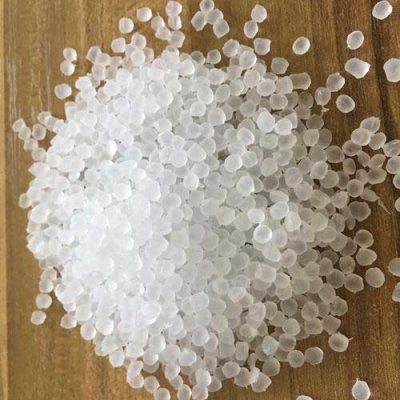
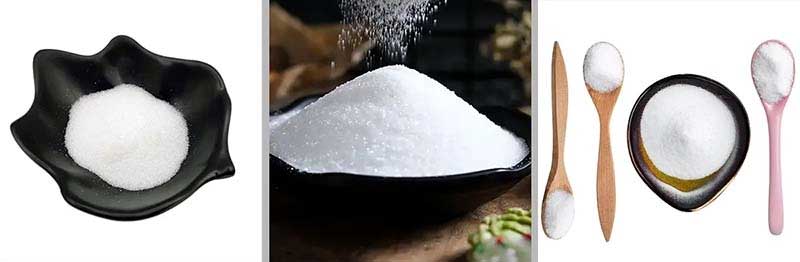
Its chemical formula is C₄H₁₀O₄ with CAS number 149-32-6 and molecular weight of 122.12 g/mol . The product appears as a white crystalline powder or granules with a clean, sweet taste, approximately 60-70% as sweet as sucrose .
Erythritol possesses a unique metabolic pathway among polyols: after ingestion, it is rapidly absorbed in the small intestine but is not metabolized by any enzyme system, being excreted unchanged primarily through urine . This characteristic makes it a truly zero-calorie sweetener with no impact on blood glucose or insulin levels . With its high digestive tolerance, non-cariogenic properties, and clean taste profile, erythritol is widely used globally in foods, beverages, oral care products, and pharmaceuticals, with the food additive code E968 .
2. Key Features
True Zero Calorie: Erythritol has an extremely low caloric value and can be labeled as 0 kcal/g according to regulations in the US, EU, and Japan . This is due to its unique metabolic pathway—it is not metabolized by the body and is excreted unchanged in urine .
Blood Glucose Friendly: It has a glycemic index and insulin index of 0, causing no spikes in blood glucose or insulin levels, making it an ideal sugar substitute for diabetics and those managing blood sugar .
Superior Digestive Tolerance: Erythritol has the highest digestive tolerance of all polyols (sugar alcohols) . It is absorbed in the small intestine and does not reach the large intestine in significant amounts to be fermented by bacteria, resulting in a very low risk of gastrointestinal discomfort (bloating, diarrhea) compared to traditional sugar alcohols like xylitol or maltitol .
Dental Health Benefits: Erythritol cannot be fermented by oral bacteria to produce acids that cause tooth decay. It effectively inhibits plaque formation, reduces enamel demineralization, and prevents cavities . The US FDA has approved a health claim stating it "does not promote tooth decay" .
Clean Sweet Taste: Erythritol provides a clean, sweet taste very close to sucrose with no unpleasant aftertaste. It is particularly effective at masking the bitter or lingering aftertaste of high-intensity sweeteners like stevia and monk fruit .
Unique Cooling Effect: When dissolved in water, erythritol absorbs heat, creating a pleasant physical cooling sensation ideal for products like mints, chocolates, and chewing gum .
High Stability & Processing Ease: Highly stable to heat and acid, erythritol does not decompose or discolor up to 180°C . It does not participate in Maillard browning, making it suitable for baked goods requiring a light color. Its extremely low hygroscopicity prevents caking even in humid environments, facilitating storage and processing .
3. Technical Specifications with Explanations
| Parameter | Typical Value/Specification | Description & Significance |
|---|---|---|
| Molecular Formula | C₄H₁₀O₄ | Core identifier for chemical structure . |
| Molecular Weight | 122.12 g/mol | Used for quantitative analysis and formulation calculations . |
| CAS Number | 149-32-6 | Universal chemical substance identifier . |
| EINECS Number | 205-737-3 | European inventory identifier. |
| E-Number | E968 | EU food additive designation . |
| Appearance | White crystalline powder or granules | Visual quality indicator. Should be uniform white, free from lumps or visible impurities . |
| Purity (Assay) | ≥ 99.5% – ≥ 99.0% | Core specification. Food grade typically requires purity above 99% or 99.5% to ensure sweetness and functionality . |
| Sweetness | Approximately 60 – 70% of sucrose | Key parameter for determining addition levels in formulations . |
| Caloric Value | 0 – 0.2 kcal/g | Can be labeled as 0 kcal/g according to various regulations . |
| Melting Point | 118 – 122 °C | Characteristic physical constant for preliminary purity verification . |
| Solubility in Water | Approximately 37% (w/w) at 25°C | Moderate solubility, easily crystallizes, providing good mouthfeel in chocolate . |
| Hygroscopicity | Extremely low | Does not absorb moisture even at 90% humidity; prevents caking during storage . |
| pH (10% solution) | 5.0 – 7.0 | Neutral range, compatible with most food systems . |
| Residue on Ignition | ≤ 0.1% | Represents inorganic impurity content; low value indicates high purity . |
| Reducing Sugars | ≤ 0.3% | Controls reducing sugar content to prevent unwanted browning reactions . |
| Heavy Metals (as Pb) | ≤ 0.5 – 1 mg/kg | Critical safety parameter ensuring food regulation compliance . |
| Lead (Pb) | ≤ 0.5 mg/kg | Critical safety parameter ensuring food regulation compliance . |
| Arsenic (As) | ≤ 0.3 mg/kg | Critical safety parameter ensuring food regulation compliance . |
| Total Plate Count | ≤ 300 cfu/g | Microbiological safety indicator . |
| Yeast & Mold | ≤ 50 – 100 cfu/g | Microbiological safety indicator . |
4. Applications
Food & Beverage Industry
Sugar-Free Beverages: Used in tea drinks, fruit-flavored beverages, and sports drinks to provide clean sweetness and refreshing mouthfeel with zero calories .
Dairy Products: Applied in yogurt, fermented milk drinks, and dairy desserts to provide sweetness, cooling sensation, and improved texture .
Baked Goods: Due to its non-participation in Maillard reactions, ideal for producing light-colored, clean-tasting sugar-free cakes, cookies, and bread . Also provides moisture retention and soft structure .
Chocolate & Confectionery: Leverages its endothermic property to deliver unique cooling sensation and clean sweetness in chocolates and mints . Its non-hygroscopic nature helps prevent sugar bloom in chocolate . Used in hard candies and jellies for sweetness and texture improvement .
Tabletop Sweeteners: Packaged as zero-calorie sugar substitutes for coffee, tea, and other beverages .
Oral Care & Pharmaceutical
Oral Care Products: As a non-cariogenic sweetener widely used in toothpastes, mouthwashes, and oral sprays to inhibit oral bacteria and maintain dental health .
Pharmaceutical Excipient: Serves as a diluent and disintegrant in tablets and capsules, improving palatability, especially in chewable tablets and lozenges .
Personal Care & Cosmetics
Humectant: Utilized for its moisturizing properties in skincare and cosmetic formulations .
Industrial Applications
Functional Food Ingredient: Blended with high-intensity sweeteners (stevia, monk fruit) to leverage synergistic effects and mask undesirable aftertastes, improving overall sweetness profile .
5. Product Grade Comparison
| Parameter/Grade | Food Grade (Standard) | Food Grade (Fine Powder/Granulated) | Pharmaceutical Excipient Grade |
|---|---|---|---|
| Core Standard | Meets FCC, EU E968, GB 2760 | Meets FCC, EU E968 | Meets USP/NF, Ph.Eur. |
| Purity | ≥99.5% | ≥99.5% | ≥99.0% |
| Particle Size | Standard crystalline granules | Fine powder or specific particle size (optimized for mouthfeel or dissolution) | Standard or custom |
| Critical Parameters | Heavy metals, arsenic, reducing sugars, microbiology | Particle size distribution, dissolution rate, mouthfeel | Heavy metals, microbiology, residual solvents |
| Primary Applications | Beverages, dairy, confectionery, tabletop sweeteners | Chocolate, baked goods, confectionery requiring smooth texture | Tablets, capsules, lozenges, pharmaceutical excipients |
| Packaging | 20 kg, 25 kg bags/drums | 20 kg, 25 kg bags/drums | As per customer requirements |
6. Purchasing & Selection Guide
Select by Application Particle Size
Standard Granules: Suitable for beverages, yogurt, tabletop sweeteners, and systems where easy dissolution is required.
Fine Powder: Recommended for chocolate and baked goods. Fine powder blends more easily with fats and provides smoother mouthfeel and enhanced cooling sensation .
Regulatory Compliance Verification
Erythritol is widely accepted globally as food additive E968 . In China, under GB 2760, it is approved for use in various food categories according to production needs .
In the US, it is recognized by the FDA as GRAS (Generally Recognized as Safe) . Ensure suppliers provide specifications and documentation compliant with target market regulations.
Purity & Impurity Considerations
Verify product purity meets specifications (≥99.5%) and that heavy metals (lead, arsenic) are well below regulatory limits . For pharmaceutical applications, compliance with relevant pharmacopoeia standards is required.
Special Dietary Considerations
Erythritol is vegan and gluten-free . Request relevant certifications if needed for your target market.
7. Frequently Asked Questions (FAQ)
Q: What is the difference between erythritol and sucrose?
A: Erythritol is about 70% as sweet as sucrose but provides only a fraction of the calories (zero per gram in many regulatory frameworks). Its metabolism is insulin-independent and does not affect blood glucose. Importantly, erythritol is non-cariogenic (does not cause tooth decay) , unlike sucrose. It also offers a unique cooling sensation .
Q: Does erythritol cause digestive discomfort?
A: Erythritol has the highest digestive tolerance of all sugar alcohols . Because it is absorbed in the small intestine and excreted in urine, it does not reach the large intestine to be fermented by bacteria like other polyols. Therefore, the risk of bloating and diarrhea is very low at normal consumption levels. However, excessive consumption (e.g., >1 g per kg body weight) may still cause mild discomfort in sensitive individuals .
Q: How is erythritol produced commercially?
A: Commercial production primarily uses microbial fermentation . Glucose derived from starch (wheat, corn) is fermented by specific yeasts (e.g., Moniliella pollinis), followed by purification, crystallization, and drying processes .
Q: Is erythritol safe for pets (especially dogs)?
A: Xylitol is known to be highly toxic to dogs, but the effects of erythritol on dogs are not well-studied. For safety, it is recommended to keep all products containing sugar alcohols (including erythritol) out of reach of pets .
Q: Can erythritol be used in baking? What are the considerations?
A: Yes, but with two key considerations: First, erythritol does not participate in Maillard browning, so baked goods will be lighter in color than those made with sugar . Second, its moderate solubility and tendency to crystallize upon cooling can create a pleasant "sandy" texture or surface "frosting" in cakes and cookies, which may be desirable or may require recipe adjustment.
Q: Can erythritol be combined with stevia?
A: Absolutely, and it is an excellent combination. Erythritol effectively masks the bitter aftertaste of stevia, while both sweeteners exhibit synergistic effects, resulting in a higher overall sweetness than the sum of their individual contributions .
8. Delivery, Certification & Service
Delivery Capabilities
Inventory Status: Common sizes (20 kg, 25 kg bags) available from regional warehouses for rapid dispatch
Sample Program: 500g-1kg samples available for food manufacturers and research institutions for formulation testing and sensory evaluation
Packaging Options:
Small quantities: 1 kg, 5 kg aluminum foil bags
Industrial quantities: 20 kg, 25 kg multi-layer paper bags or fiber drums
Custom packaging: Available for volume customers
Shipping: Non-hazardous material; standard freight shipping available (express, LTL, full truckload, container)

Quality Certifications
ISO 9001:2015, FSSC 22000, and other food safety management system certifications
Products meet applicable standards: FCC, E968, GB 2760
Certificate of Analysis (COA) provided with each batch, documenting appearance, purity, loss on drying, residue on ignition, heavy metals, reducing sugars, and microbiological parameters
Safety Data Sheet (SDS) available in multiple languages
Third-party test reports (e.g., SGS) available upon request
Additional certifications available:
Non-GMO declaration
Allergen statement
Halal certificate
Kosher certificate
Gluten-free statement
Technical Support & Services
Technical Consultation: Food application specialists available for formulation assistance, sweetness optimization, baking adaptation, and regulatory compliance guidance
Custom Services: Particle size customization, quality specifications, and packaging options for qualified long-term customers
Regulatory Support: Documentation packages for product registration in target markets
Documentation Available
Certificate of Analysis (COA)
Safety Data Sheet (SDS/MSDS)
Technical Data Sheet (TDS)
Food Grade specification and compliance statements
Non-GMO declaration
Allergen statement
Halal certificate
Kosher certificate
Gluten-free statement