

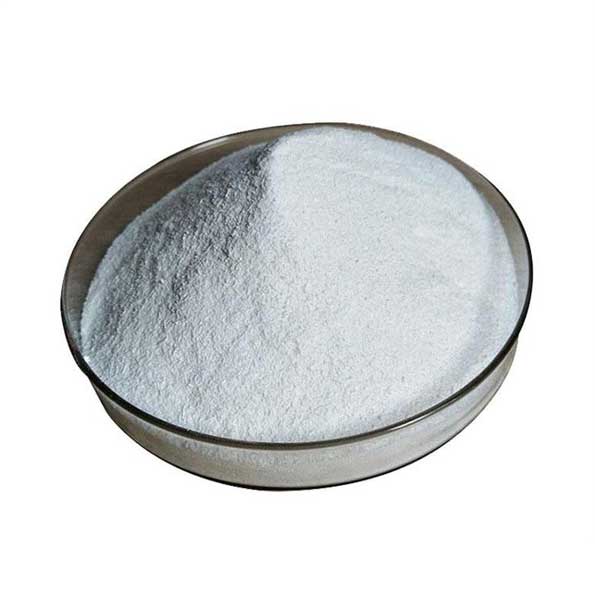
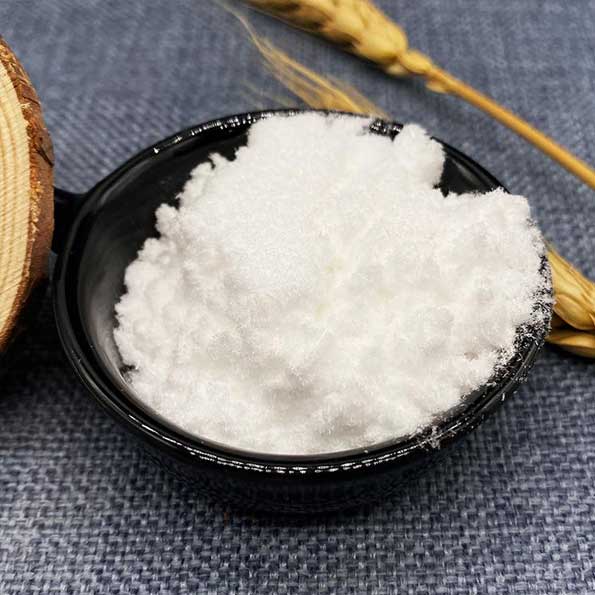
L-Glutamic acid monosodium salt - hydrate CAS#6106-04-3
Advantages
Enhancement of Umami and Flavor Enhancement
It has a strong umami flavor (known as "umami"), which can significantly enhance the flavor of food and reduce the need for salt.
It can work synergistically with other umami substances (such as nucleotides) to further amplify the umami flavor.
Stability and solubility
The monohydrate form is more stable during storage, and the crystalline water can reduce the phenomenon of moisture absorption and caking.
It is easily soluble in water, making it convenient to be uniformly dispersed in liquid or solid foods.
High level of security
Food additives that have been recognized as safe by international food agencies (such as FDA, EFSA, JECFA).
They have been widely used for decades, and there is no clear evidence suggesting that the regular dosage is harmful to healthy individuals.
Cost-effectiveness
The production cost is low, and it can replace some salt or stock, thereby reducing the cost of food processing.
Widely applicable
Suitable for various food systems (acidic, neutral, high-temperature processing), with good heat resistance.
The chemical composition is sodium glutamate, which is a type of umami seasoning that dissolves easily in water. Its aqueous solution has a strong umami flavor. When combined with salt, its taste becomes even more delicious. Monosodium glutamate can be made from protein sources such as wheat gluten, or from caramelized glutamic acid contained in starch or beet sugar syrup. It can also be synthesized through chemical methods. Monosodium glutamate has the effect of alleviating bitterness, acidity, and sourness. Glutamic acid sodium participates in the normal metabolism of proteins in the human body, promotes the oxidation process, and has certain health benefits for the brain nerves and liver. Adults can consume as much as they want, but infants should not eat it.
| CAS Number | 6106-04-3 | Purity | 99% |
| Place of Origin | China | Type | Synthetic material intermediates |
| Appearance | White crystals | Molecular formula | C5H8NO4Na.H20 |
| Alternative name | L-Glutamic acid monosodium salt - hydrate | ||
| Density: | 1.7812 |
| Melting point: | 232℃ |
| Boiling point: | 333.8 °C at 760 mmHg |
| Flash point: | 155.7 °C |
| Vapor pressure: | 1.70e-08 mmHg |
| PSA: | 112.68 |
| logP: | -1.4356 |
| Solubility: | 600g/l |
| Storage: | Ambient temperatures. |
| Chemical properties: | White to almost white crystals or cryst. powder L(+)-Monosodium glutamate monohydrateSupplier |
| Color: | White to off-white powder |
| Odor: | Odorless |
| pH value: | Between 3,0 and 3,5 (saturated solution) |
| Solubility: | Dissolved in water |
| Spectral characteristics: | Specific optical rotation: +24.2 to +25.5 deg at 25 deg C/D (concn = 8.0 g in 100 mL 1.0 N hydrochloric acid) |
| Stability: | L-Sodium glutamate is slightly levorotatory in water, but dextrorotatory in acid soln (the free L-acid is dextrorotatory) |
| Stable under recommended storage conditions. /L-Glutamic acid hydrochloride/ | |
| Storage temperature: | Store at +5°C to +30°C. |
Physical properties:
Properties of sodium glutamate (6106-04-3): 1. This product is colorless to white prismatic crystals or white crystalline powder. 2. It has a slight sweet or salty taste. It basically has no odor, with a taste threshold of 0.014%. 3. It has no hygroscopicity. It is stable to light and heat. The 10% aqueous solution decomposes at 100°C under aerated conditions for 3 hours at a pH value of 6.9, with a decomposition rate of approximately 0.6%. 4. It loses its crystalline water upon heating to 120°C. The melting point is 195°C, the relative density is 1.635, and the specific gravity is 1.20. 5. It is easily soluble in water (71.7g/100ml), slightly soluble in ethanol, and insoluble in ether. The pH value of a 5% aqueous solution is 6.7 to 7.2. 6. The natural form is widely present in animal and plant tissues as protein components or in free state. It is found in meat, poultry, fish, milk, etc. The mother's milk contains approximately 22mg/100ml of glutamate salts, which is 10 times the content in cow's milk.
Main application
Food industry
Seasonings: Used for soy sauce, sauces, soup mixes, seasoning powders, and multi-purpose seasoning packets, etc.
Processed foods: Enhance the flavor of snacks, canned foods, frozen foods, meat products, and instant noodles.
Catering industry: Widely used in Chinese and Japanese dishes as well as soups to enhance the flavor.
Salt reduction application
By enhancing the perception of saltiness, it helps reduce the sodium content in food (allowing for a reduction of approximately 30-40% in the amount of salt used).
The field of medicine and nutrition
Used to supplement sodium and glutamic acid in infusion or nutritional preparations (must comply with pharmacopoeia standards).
In a few cases, it is used as a drug excipient to improve taste.
Research and biochemical reagents
As a component of microbial culture medium (nitrogen source). Reagents for use in biochemical research or cell culture.