

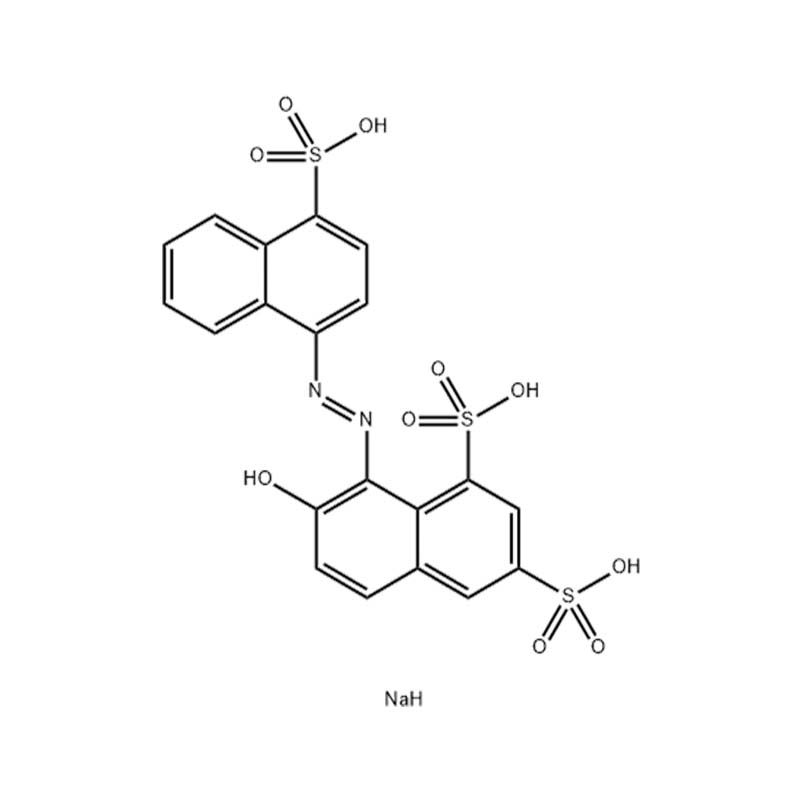
Acid Red 18
Wide Range of Applications: Carmine is extensively utilized in a variety of food products such as fruit juices, confectionery, baked goods, and ice cream to provide a vivid red pigmentation.
Regulated Usage: Its application is subject to strict regulatory control, with clearly defined maximum usage levels established to guarantee food safety and prevent improper use.
High Stability: The colorant demonstrates exceptional thermal stability, maintaining its integrity at high temperatures with a melting point exceeding 300°C, ensuring consistent performance in various food processing conditions.
Controlled Residual Limits: Carmine is authorized for specific applications including natural sausage casings, with stringent maximum residue limits enforced to ensure consumer safety.
1. Product Overview
Acid Red 18, most commonly known as New Coccine or Ponceau 4R, is a synthetic red azo dye belonging to the acid dye family. It is one of the most widely used red colorants globally, serving as a food additive (E124 in some regions, though regulatory status varies), pharmaceutical excipient, cosmetic colorant, and biological stain .
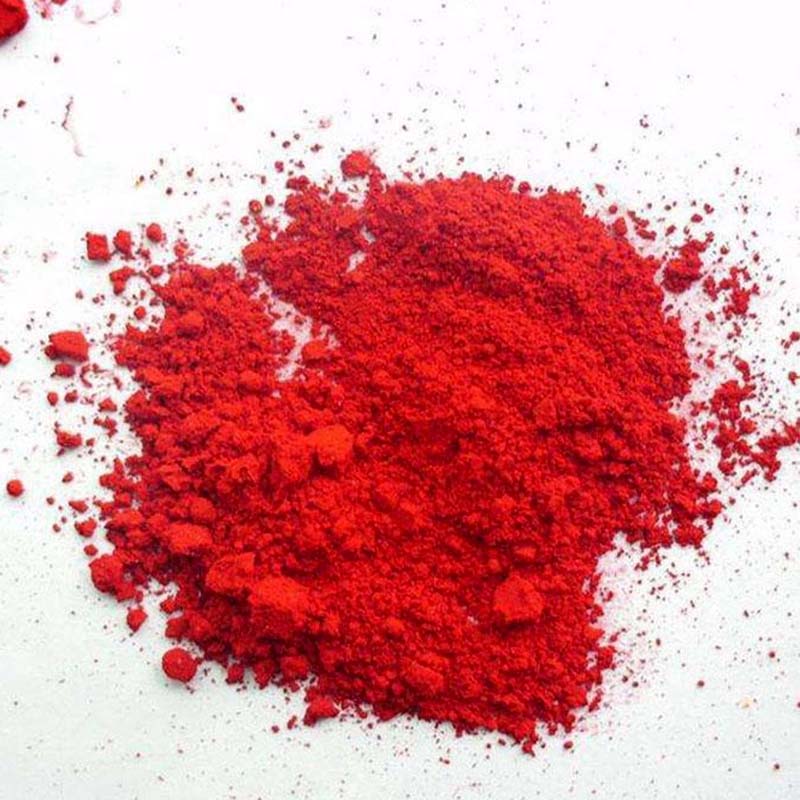
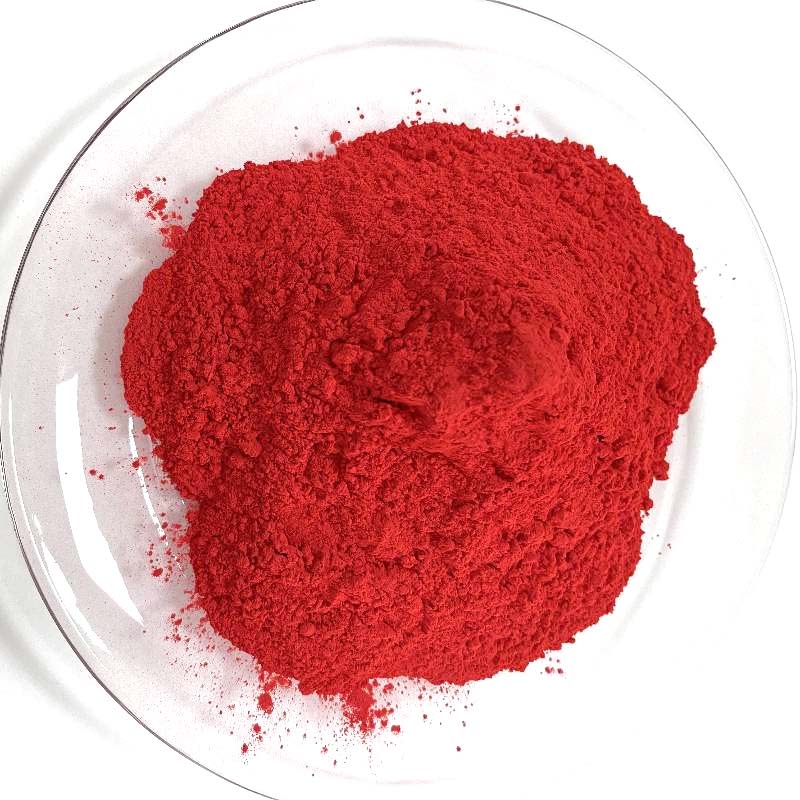
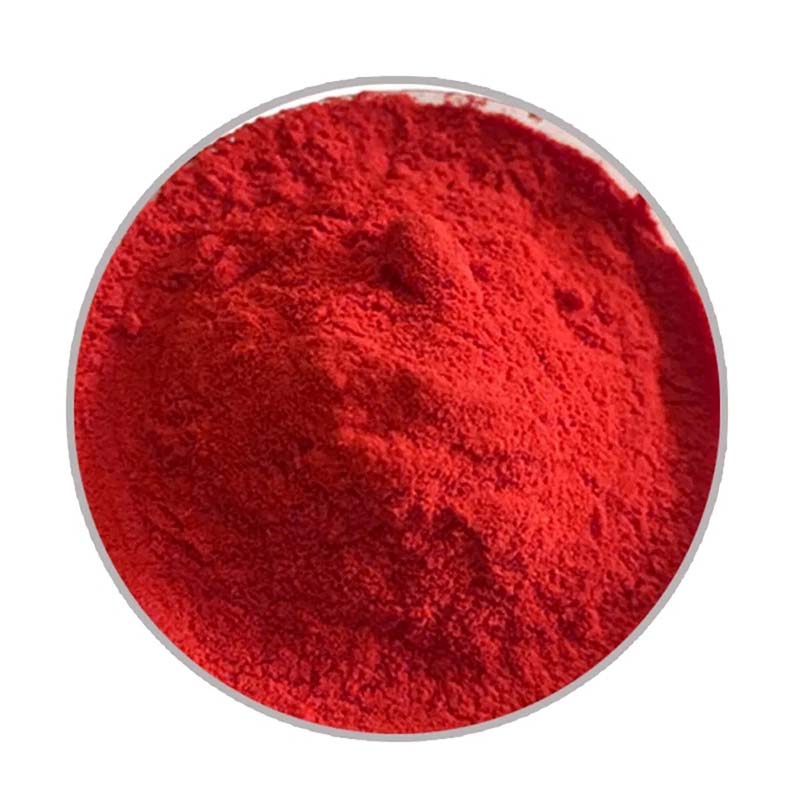
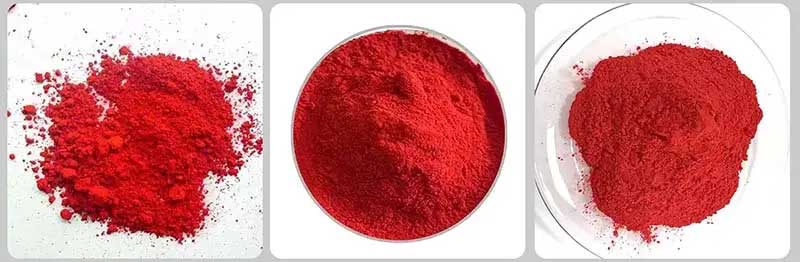
Its chemical formula is C₂₀H₁₁N₂Na₃O₁₀S₃ with CAS number 2611-82-7 and Color Index number 16255 . The product appears as a red to dark red or maroon powder, producing a vibrant strawberry-red solution when dissolved in water .
As a classic monoazo dye, Acid Red 18 is characterized by its brilliant red hue, good water solubility, and stability under normal conditions. It is synthesized from aromatic hydrocarbons and finds extensive applications across food, beverage, pharmaceutical, cosmetic, textile, and research sectors .
2. Key Features
Brilliant Red Coloration: Produces a bright, vibrant strawberry-red color with maximum absorption at approximately 506-510 nm, providing excellent tinctorial strength and visual appeal .
Good Stability Profile: Exhibits good stability to light, heat, and acids. Stable against citric acid and tartaric acid, making it suitable for a wide range of food and beverage applications .
Excellent Water Solubility: Readily soluble in water (approximately 25 mg/mL), facilitating easy incorporation into aqueous systems such as beverages, syrups, and liquid formulations .
Versatile Multi-Industry Applications: Serves diverse roles across industries:
Food colorant (beverages, confectionery, dairy products)
Biological staining agent
Textile dye (wool, nylon, silk)
Cosmetic ingredient
Research and diagnostic applications
Multiple Purity Grades Available: Offered in various specifications including high-purity analytical standards (≥98%), research grades (≥85%), and technical grades for industrial applications .
Proven Research Track Record: Widely used in scientific studies including decolorization studies with fungi, genotoxicity research, and analytical method development for food additive determination .
3. Technical Specifications with Explanations
| Parameter | Typical Value/Specification | Description & Significance |
|---|---|---|
| Molecular Formula | C₂₀H₁₁N₂Na₃O₁₀S₃ | Core identifier for chemical structure; trisodium salt of an azo dye with three sulfonate groups . |
| Molecular Weight | 604.47 g/mol | Used for quantitative analysis and formulation calculations . |
| CAS Number | 2611-82-7 | Universal chemical substance identifier . |
| Color Index (C.I.) No. | 16255 | Internationally recognized dye classification number . |
| Appearance | Red to dark red to maroon powder | Visual quality indicator; should be uniform in color, free from lumps or visible impurities . |
| Dye Content (Purity) | ≥80% – ≥98% (grade dependent) | Core specification. Higher purity indicates fewer impurities (subsidiary dyes, salts). Pharmaceutical/analytical grades require ≥98% . |
| Maximum Absorbance (λmax) | 506 - 510 nm (in 0.02M ammonium acetate solution) | Critical spectral property. Used for qualitative and quantitative analysis; ensures correct color hue . |
| Melting Point | >300°C – >350°C (decomposes) | Characteristic physical constant; high thermal stability before decomposition . |
| Solubility | Water: ~25 mg/mL (soluble) Ethanol: Slightly soluble DMSO: ~10 mg/mL Organic solvents: Insoluble | Determines application systems. Highly water-soluble for aqueous formulations; requires organic co-solvents for non-aqueous systems . |
| Subsidiary Dyes | ≤ 1.0% – 4.0% | Measure of other dye impurities; lower values indicate higher purity and color consistency . |
| Unsulphonated Aromatic Amines | ≤ 0.01% | Critical safety parameter; controls potentially harmful aromatic amine impurities . |
| Loss on Drying | ≤ 5.0% – 10.0% | Measures moisture and volatile content; critical for stability and accurate weighing . |
| Chlorides & Sulfates (as sodium salts) | ≤ 13.0% | Total inorganic salt content; affects purity and may influence formulation performance . |
| Heavy Metals (Pb, As, Hg) | ≤ 1-2 ppm each | Essential safety parameter ensuring compliance with food and pharmaceutical regulations . |
| LogP (Partition Coefficient) | ~6.07 | High lipophilicity indicates limited cell membrane permeability; primarily water-soluble . |
| Hydrogen Bond Donor/Acceptor | Donor: 1 Acceptor: 12 | Characterizes molecular interactions and solubility behavior . |
| Stability | - Stable to light, heat, and acids - Stable to citric acid, tartaric acid - Poor resistance to reducing agents - Turns brown in alkaline solutions - Susceptible to bacterial degradation | Critical application parameters. Avoid strongly alkaline conditions and reducing environments . |
4. Applications
Food & Beverage Industry
Food Colorant: As Ponceau 4R, used in a wide range of food products including:
Beverages: Soft drinks, fruit juices, alcoholic and non-alcoholic beverages
Confectionery: Candies, jellies, desserts, ice cream
Preserved Fruits: Canned fruits, jams, jellies, marmalades
Bakery Products: Cake decorations, icings
Dairy Products: Flavored yogurts, milkshakes
Pharmaceutical & Healthcare
Pharmaceutical Coloring: Tablet coatings, capsule shells, liquid oral preparations (syrups, suspensions) for product identification and improved patient compliance.
Diagnostic Reagents: Component in diagnostic kits and formulations .
Cosmetics & Personal Care
Hair Color Products: Semi-permanent hair dye for shampoos, conditioners, and hair color treatments (0.1-1.0% usage rate) .
Cosmetic Formulations: Colorant in products where water-soluble red shades are desired (subject to regional cosmetic regulations) .
Textile Industry
Acid Dye: Dyeing wool, nylon, silk, and other polyamide fibers, providing vibrant red shades with good light fastness and wash fastness .
Biological Staining & Research
Biological Stain: Staining biological specimens for enhanced microscopic visibility in histology and microbiology .
Decolorization Studies: Used as a model dye for studying fungal decolorization by Phanerochaete chrysosporium and Pleurotus sajorcaju in environmental microbiology research .
Genotoxicity Research: Used in understanding the genotoxic potential of food colorants .
Analytical Chemistry: HPLC standard for determining additive contents in beverages; biosensor development for methanol-ethanol mixture analysis .
ADME/Pharmacokinetic Research: Biliary excretion studies in rats to understand active transport processes .
5. Product Grade Comparison
| Parameter/Grade | Technical Grade | Biological Stain Grade | High Purity/Reagent Grade | Analytical Standard |
|---|---|---|---|---|
| Core Standard | Industrial specifications | Meets biological staining requirements | ≥85% dye content for general lab use | ≥98% (HPLC) for precise analysis |
| Dye Content | ≥80% - 82% | ≥85% | ≥85% | ≥98% |
| Critical Parameters | Subsidiary dyes, chlorides/sulfates, water insolubles | Staining performance, solubility | UV-vis absorbance, λmax, loss on drying | Exact content, HPLC purity, heavy metals |
| Physical Form | Fine powder | Fine powder | Fine powder | Powder |
| Primary Applications | Textile dyeing (wool, nylon), industrial coloring, hair color products | Biological staining, microbiology, histology | Research applications, decolorization studies, general lab use | Analytical testing, HPLC standard, pharmaceutical research |
| Packaging | 25 kg bags/drums | 25 g, 100 g bottles | 25 g, 100 g, 500 g bottles | 100 mg, 500 mg, 1 g vials |
| Typical Price Position | Reference | +20-30% | +30-50% | +100-200% |
6. Purchasing & Selection Guide
Select by Application Area
Textile & Industrial Users: Choose Technical Grade with ≥80-82% dye content. Focus on subsidiary dyes, salt content, and water insolubles specifications. Suitable for bulk coloring operations .
Hair Color Product Manufacturers: Select Technical Grade suitable for cosmetic applications. Note formulation requirements:
Dissolve in hot water (70-80°C) for optimal incorporation
Usage rate: 0.1-1.0% (recommended 0.2%)
Compatible with non-ionic or amphoteric detergents; avoid anionic surfactants
Avoid electrolytes/salts that affect color longevity
Optimal pH range: alkaline but ≤9 to prevent decomposition
Research Laboratories & Biological Staining:
Biological Stain Grade (≥85%): For histology, microbiology, and fungal decolorization studies
High Purity Grade (≥85%): For general research applications
Analytical & Pharmaceutical Research:
HPLC method development and validation
Quantitative analysis of food additives
Genotoxicity and pharmacokinetic research
Reference standard preparation
Must select Analytical Standard (≥98% HPLC) for:
Regulatory Compliance Verification
⚠️ Important Regulatory Notice:
Food Use: Ponceau 4R (E124) regulatory status varies significantly by country. Some jurisdictions have restricted or banned its use in foods. Always verify current local regulations for your target market.
Pharmaceutical Use: Must comply with relevant pharmacopoeia standards if used in medicinal products.
Cosmetic Use: Check regional cosmetic ingredient regulations (EU, US, Japan, etc.) before formulation.
Storage & Handling Considerations
Store in tightly sealed containers in a cool, dry, well-ventilated area
Protect from direct sunlight and strong oxidizing agents
Avoid exposure to strong reducing agents and highly alkaline conditions
Hygroscopic; keep containers tightly closed to prevent moisture absorption
Recommended storage: Room temperature (with protection from light and heat)
Long-term storage stability: Under optimal conditions, shelf life is typically 2-3 years
7. Frequently Asked Questions (FAQ)
Q: Are Acid Red 18, New Coccine, and Ponceau 4R the same product?
A: Yes, these are different names for the same chemical substance. Acid Red 18 is the generic name, New Coccine is a common synonym, and Ponceau 4R is the name widely used in food applications. The Color Index number C.I. 16255 and CAS number 2611-82-7 uniquely identify this compound .
Q: What is the difference between Acid Red 18 (C.I. 16255) and Acid Red 18 (C.I. 14685)?
A: These are completely different compounds with different chemical structures, CAS numbers, and properties. C.I. 16255 (CAS 2611-82-7) is New Coccine/Ponceau 4R. C.I. 14685 (CAS 14685-0) is a different acid dye with different applications. Always verify both CAS number and C.I. number when ordering .
Q: Is Acid Red 18 safe for use in foods?
A: Safety opinions vary by regulatory authority. Ponceau 4R (E124) is approved in some countries but restricted or banned in others due to concerns about azo dye safety and potential links to hyperactivity in children. Always check current regulations in your specific target market before using in food products .
Q: How should I dissolve Acid Red 18 for my formulation?
A: Acid Red 18 is readily soluble in water. For optimal dissolution:
Hot water method: Use water at 70-80°C to dissolve completely
Room temperature: Stir in water until dissolved (approximately 25 mg/mL solubility)
For organic systems: Pre-dissolve in DMSO (10 mg/mL) or small amount of ethanol, then add to formulation
Avoid strongly alkaline solutions (turns brown/decomposes)
Q: Why does my Acid Red 18 solution turn brown?
A: This typically occurs when the solution becomes alkaline. Acid Red 18 turns brown in alkaline conditions and may decompose. Maintain pH below 9 and avoid strongly basic environments. The color is stable under acidic conditions .
Q: Can Acid Red 18 be used in hair color products?
A: Yes, it is used as a semi-permanent hair color in shampoos, conditioners, and treatment products. Recommended usage is 0.1-1.0% (typically 0.2%). For best results:
Mix in hot water (70-80°C) to dissolve
Use with non-ionic or amphoteric detergents (avoid anionic surfactants)
Avoid electrolytes/salts that affect color longevity
Alkaline pH (≤9) improves color retention
Q: What are the main impurities in technical grade Acid Red 18?
A: Technical grade typically contains:
Subsidiary dyes (≤1.0%)
Chlorides and sulfates as sodium salts (≤13.0%)
Water insoluble matter (≤0.2%)
Unsulphonated aromatic amines (≤0.01%)
Heavy metals (Pb, As, Hg at ≤1-2 ppm each)
8. Delivery, Certification & Service
Delivery Capabilities
Inventory Status: Common sizes available from regional warehouses (US, Europe, Asia)
Sample Program: Small quantities available for research institutions and manufacturers for formulation testing and evaluation
Packaging Options:
Research quantities: 100 mg, 500 mg, 1 g, 5 g, 25 g, 100 g bottles/vials
Industrial quantities: 25 kg bags/drums
Custom packaging: Available for volume customers
Shipping: Non-hazardous material; standard freight shipping available (express, LTL, full truckload)

Quality Certifications
Certificate of Analysis (COA) provided with each batch for qualified grades, documenting:
Appearance
Assay/dye content (HPLC/UV-vis)
λmax (maximum absorbance)
Loss on drying
Subsidiary dyes (where applicable)
Heavy metals (where applicable)
Safety Data Sheet (SDS) available in multiple languages
Product Specification (PS) available documenting chemical composition, physical state, purity, and storage requirements
Certificates of Origin (COO) available upon request for customs and regulatory compliance
Technical Support & Services
Technical Consultation: Application specialist team available for formulation assistance, dissolution guidance, and analytical method support
Custom Services: Tailored purity specifications and packaging options for long-term partnership customers
Regulatory Support: Documentation packages for product registration in target markets
Documentation Available
Certificate of Analysis (COA)
Safety Data Sheet (SDS/MSDS)
Technical Data Sheet (TDS)
Product Specification (PS)
Certificate of Origin (COO)