

Mercury (II) Nitrate CAS#10045-94-0
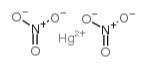
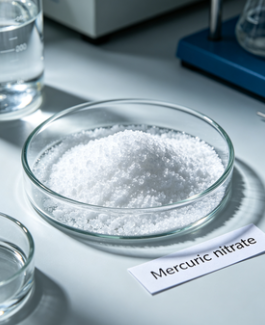
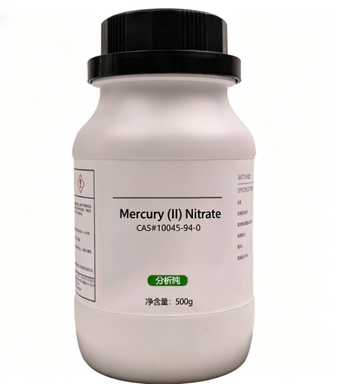
Mercury(II) nitrate, characterized by the molecular formula (Hg(NO₃)₂), is a highly toxic inorganic mercury compound with strong oxidizing and corrosive properties. It meets industrial reagent-grade specifications, featuring high purity and stable quality, widely used in chemical analysis and special industrial production fields.
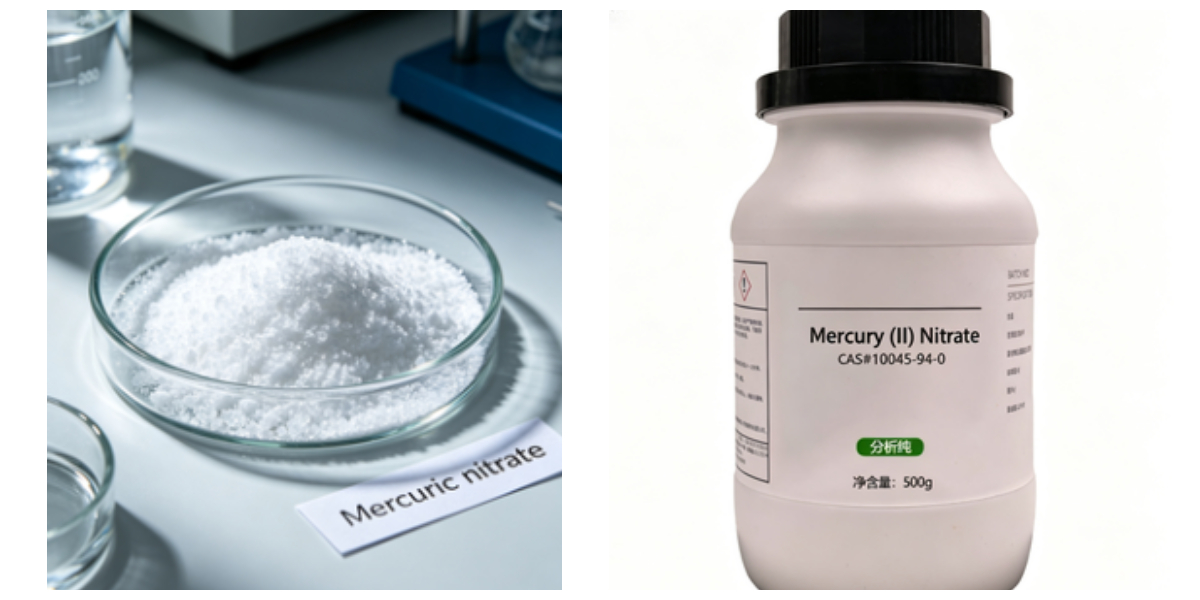
Mercury(II) Nitrate Chemical Properties
| Property | Value |
|---|---|
| Melting point | 79 °C (lit.) |
| Density | 4.3 g/cm³ |
| Vapor density | Not applicable |
| Refractive index | Not applicable |
| Storage temp | Store below +25°C, sealed, cool, dark and dry place |
| Solubility | Soluble in water, dilute nitric acid, hydrochloric acid |
| Form | Crystalline powder / Colorless transparent crystals |
| Color | White to colorless |
| Odor | Odorless |
| PH Range | Acidic (due to hydrolysis) |
| PH | 3.0-4.0 (100g/l, H₂O, 20℃) |
| Water Solubility | Highly soluble in dilute acid, hydrolyzes in neutral water |
| Sensitive | Light-sensitive, deliquescent |
| Merck | 14,5814 |
| BRN | Not applicable |
| Stability | Stable under normal conditions, decomposes on heating/light exposure |
| InChIKey | XIPZJQDSFZGZIO-UHFFFAOYSA-L |
| CAS DataBase Reference | 10045-94-0(CAS DataBase Reference) |
| NIST Chemistry Reference | Mercury(II) nitrate(10045-94-0) |
| EPA Substance Registry System | Mercury dinitrate (10045-94-0) |
Safety Information
| Item | Value |
|---|---|
| Hazard Codes | T+, N, O |
| Risk Statements | 26/27/28-33-35-50/53 |
| Safety Statements | 13-28-36/37/39-45-60-61 |
| WGK Germany | 3 |
| RTECS | OW8225000 |
| F | Oxidizing, non-flammable |
| TSCA | Yes |
| HS Code | 2852100000 |
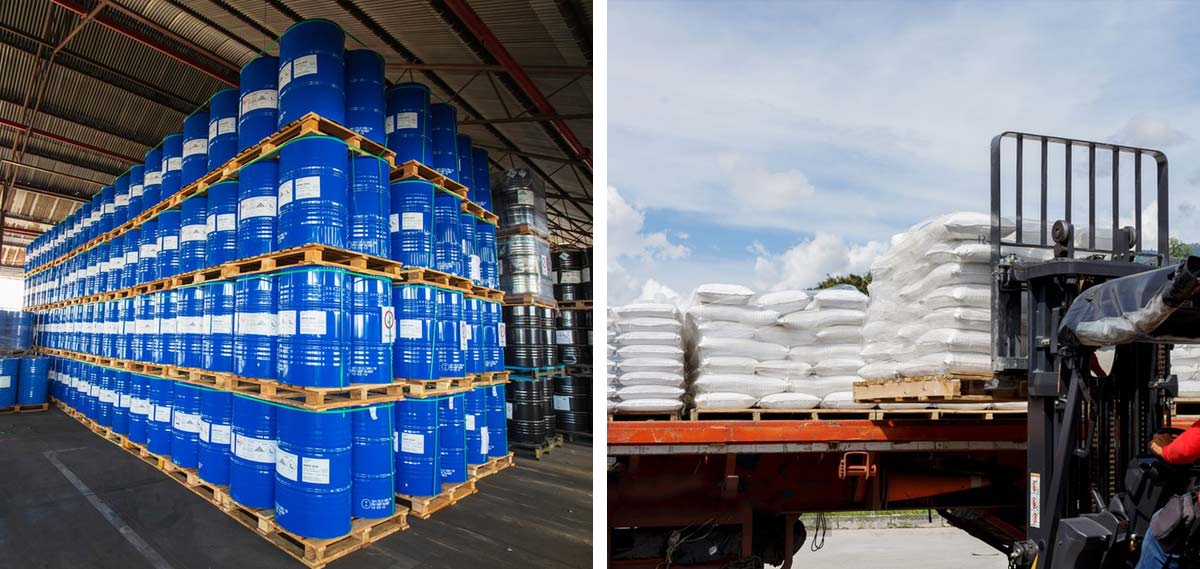
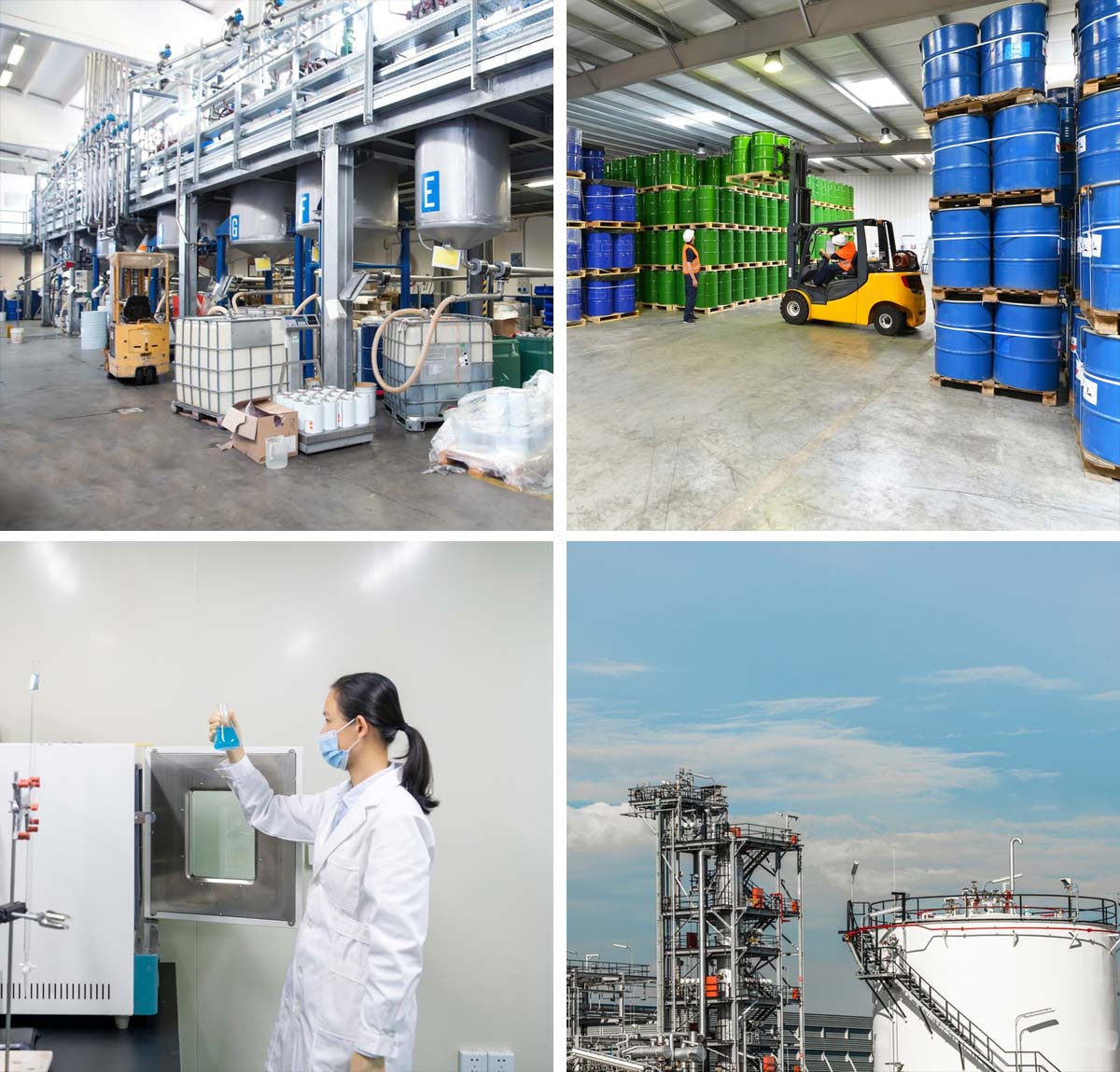
This compound is mainly used as analytical reagent in laboratory for determining chloride ions and preparing Nessler's reagent. It also serves as catalyst in organic synthesis, separating agent in metallurgical industry and raw material for manufacturing other mercury-based chemicals. Due to its high toxicity, it is strictly controlled and used only in specialized industrial and laboratory scenarios.