


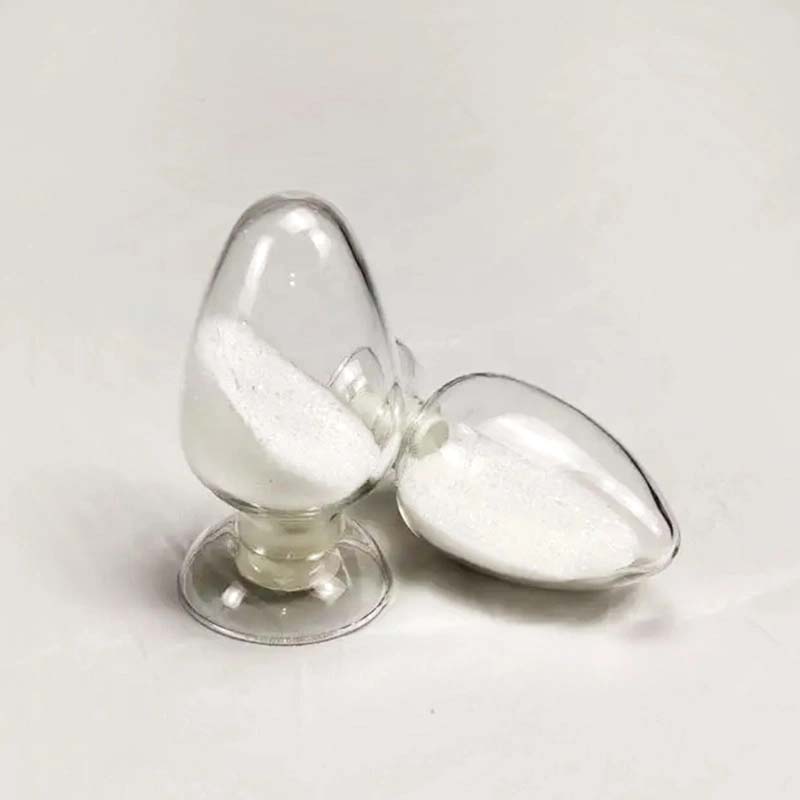
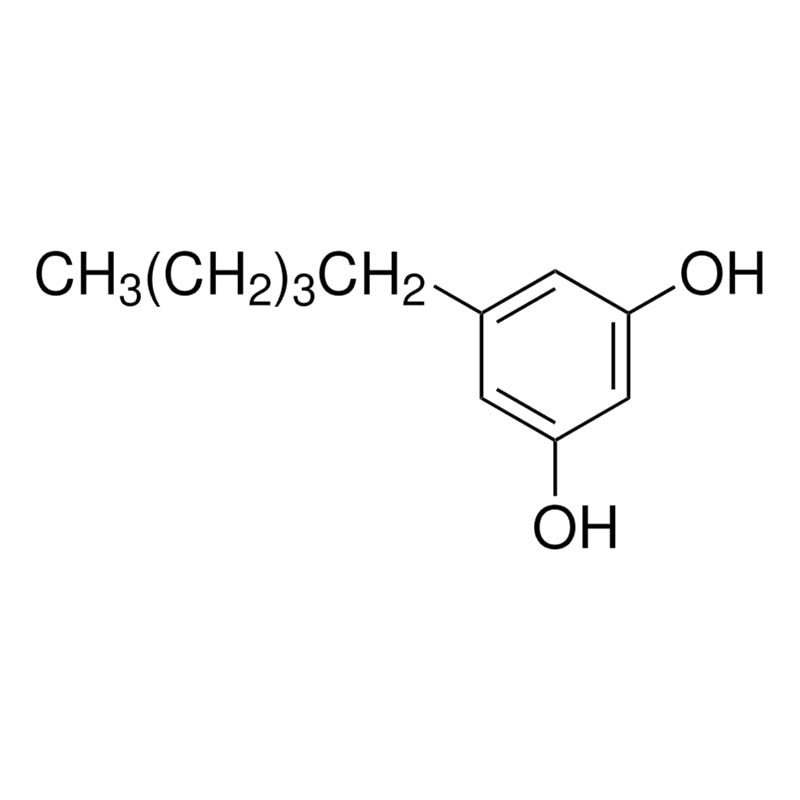
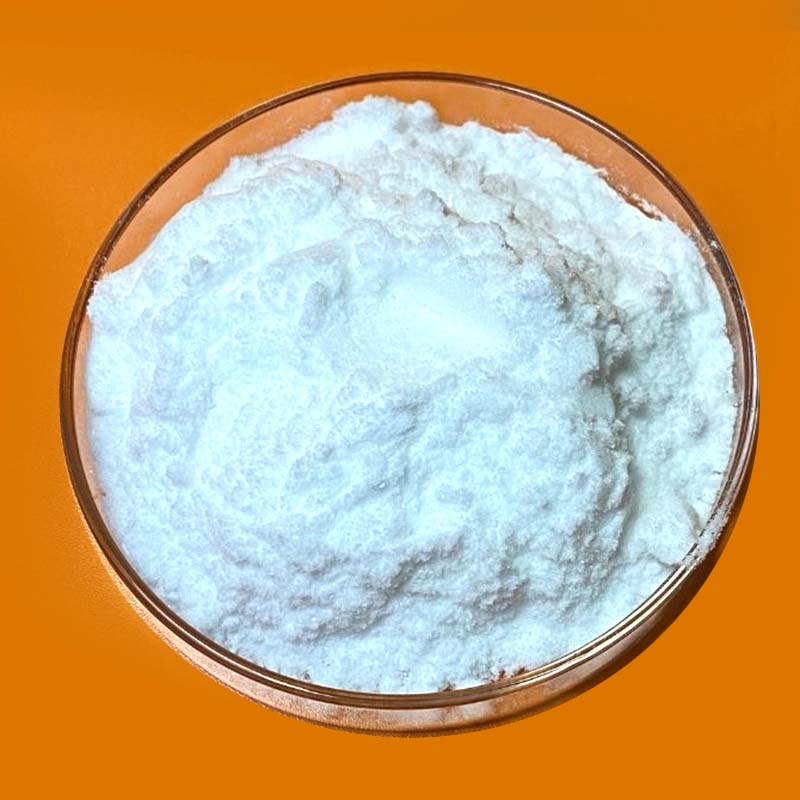
Olivetol CAS:500-66-3
The compound possesses powerful fungicidal and bactericidal potency, which can effectively inhibit and eliminate a variety of pathogenic microorganisms.
At high concentration levels, it can initiate DNA fragmentation through Cu(II) chloride-dependent oxidative reactions, with molecular oxygen participating in the reaction process.
It has been clinically proven to have antagonistic effects on retroviruses including HIV, and also exhibits significant inhibitory activity against a variety of malignant tumors and carcinomas.
Parameters
Melting point | 46-48 °C(lit.) |
Boiling point | 164 °C |
density | 1.068±0.06 g/cm3(Predicted) |
Fp | >230 °F |
storage temp. | Keep in dark place,Inert atmosphere,Room temperature |
solubility | Chloroform (Slightly), Methanol (Slightly) |
form | Solid |
pka | 9.59±0.10(Predicted) |
color | Colourless to Beige |
Stability: | Light Sensitive |
InChI | InChI=1S/C11H16O2/c1-2-3-4-5-9-6-10(12)8-11(13)7-9/h6-8,12-13H,2-5H2,1H3 |
InChIKey | IRMPFYJSHJGOPE-UHFFFAOYSA-N |
SMILES | C1(O)=CC(CCCCC)=CC(O)=C1 |
CAS DataBase Reference | 500-66-3(CAS DataBase Reference) |
NIST Chemistry Reference | 1,3-Benzenediol, 5-pentyl-(500-66-3) |
EPA Substance Registry System | Olivetol (500-66-3) |
Safety Information |
Hazard Codes | Xi |
Risk Statements | 36/37/38 |
Safety Statements | 26-36/39 |
WGK Germany | 3 |
RTECS | VH2880000 |
HS Code | 2907290090 |

Owing to such biochemical behaviors, the compound finds medical use against retrovirus infections including HIV. Reliable clinical data also confirm its efficacy for treating many types of malignant tumors.