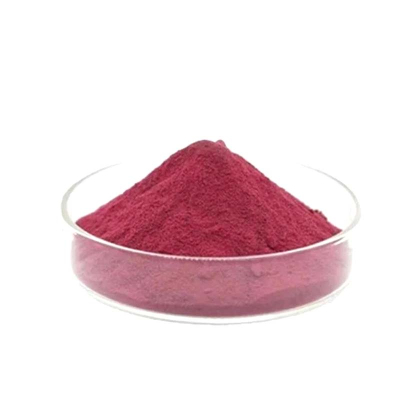


Ammonium Nitrate CAS#6484-52-2
High Solubility: Ammonium nitrate exhibits extremely high solubility in water, with its solubility increasing significantly with the rise of temperature. It is also soluble in polar organic solvents such as methanol and ethanol, while almost insoluble in non-polar solvents like benzene and ether. Its excellent water solubility enables wide application in agricultural, industrial and chemical synthesis fields.
Stable pH & Thermal Characteristics: The aqueous solution of ammonium nitrate presents a weak acidic property with a stable pH range of 5.0–5.5 for 10% aqueous solution at room temperature. Though the compound is relatively stable under normal temperature and pressure, it is susceptible to thermal decomposition when exposed to high temperature, strong impact or combustion-supporting substances, showing unique thermal response characteristics in aqueous and solid states.
Versatile Uses: It is most widely applied as a high-efficiency nitrogen fertilizer in agriculture, providing sufficient nitrogen elements for crop growth. In industrial fields, it serves as a key raw material for manufacturing industrial explosives, blasting agents and fireworks. Additionally, it acts as a common cooling agent for instant ice packs, a chemical reagent for laboratory analysis, a component of metal treatment agents, and a raw material for synthetic intermediates in fine chemical industry.
Ammonium nitrate, with the molecular formula NH₄NO₃, is a white crystalline inorganic salt with strong hygroscopicity and deliquescence. It has a water solubility of 1520 g/L at 20°C, and is soluble in methanol and ethanol, sparingly soluble in acetone, and insoluble in benzene, carbon tetrachloride and ether.
The 10% aqueous solution is weakly acidic with a pH of 5.0–5.5 at 20℃. The substance has irritant effects on skin, eyes and respiratory tract, and is widely used in agricultural fertilization, industrial explosive production, refrigeration preparation, chemical analysis and fine chemical synthesis.

Ammonium Nitrate Chemical Properties
Item | Specification |
|---|---|
Melting point | 169.6 °C (lit.) |
Boiling point | 210 °C (dec.)(lit.) |
Density | 1.72 g/cm³ |
Vapor density | 3.3 (vs air) |
Storage temp | Store at 2-8°C, dry and sealed |
Solubility | Soluble in water, methanol, ethanol; sparingly soluble in acetone; insoluble in benzene, ether |
Form | Crystalline solid |
Color | Colorless to white |
Odor | Odorless |
PH Range | 5.0–5.5 (100g/L, H₂O, 20℃) |
Water Solubility | 1520 g/L (20 º C) |
Sensitive | Hygroscopic, moisture sensitive |
Stability | Stable at normal temperature and pressure; incompatible with strong oxidizing agents, strong acids, combustible substances; easy to decompose and explode under high temperature and impact |
CAS DataBase Reference | 6484-52-2 (CAS DataBase Reference) |
Safety Information
Item | Specification |
|---|---|
Hazard Codes | O, Xi |
Risk Statements | 8-36/37/38 |
Safety Statements | 17-26-36 |
WGK Germany | 1 |
RTECS | BR9100000 |
TSCA | Yes |
HS Code | 31023000 |

This compound is widely used in multiple industrial and agricultural fields. In the agricultural industry, it serves as a high-efficiency nitrogen fertilizer with fast nutrient absorption, suitable for various soil and crop types. In the chemical industry, it is a core raw material for manufacturing ammonium nitrate explosives, emulsion explosives and industrial blasting powders. It is also commonly used to prepare portable instant cold packs by utilizing its endothermic dissolution property. Besides, it acts as a chemical analytical reagent, a metal surface treatment agent, a raw material for preparing nitrous oxide, and a functional additive in building materials and chemical synthesis industries.