


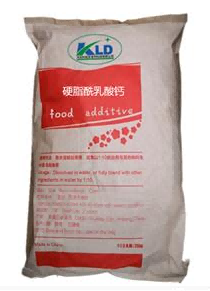
Sodium Stearoyl Lactylate CAS#25383-99-7
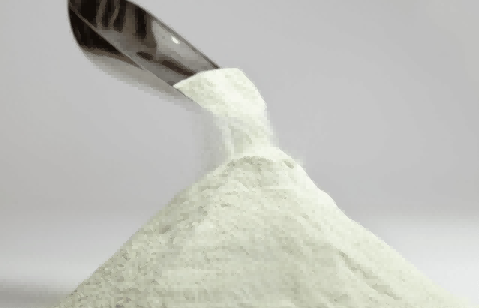
Appearance: It is an off-white to pale yellow powder or brittle flaky solid, with a faint characteristic caramel-like odor and hygroscopic tendency.
Solubility: It disperses well in hot water, dissolves readily in hot ethanol, hot vegetable oils and animal fats, and is nearly insoluble in cold water.
Stability & pH Performance: It maintains good thermal stability under conventional food processing temperatures. The pH value of its aqueous suspension is 4.0–5.5. It is stable under normal storage conditions, while incompatible with strong oxidants and strong acids.
Basic Function Features: It is an anionic ester emulsifier and dough conditioner. It can form complexes with wheat gluten proteins and amylose, providing excellent dough strengthening, gas retention, anti-staling, emulsifying and stabilizing effects, and shows good compatibility with most food hydrocolloids and other emulsifiers.
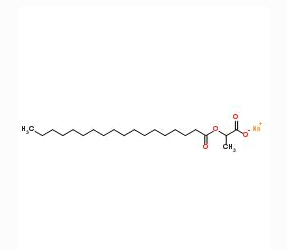
Sodium stearoyl lactylate, characterized by the molecular formula C₂₄H₄₃NaO₆, presents as an off-white to pale yellow powder or brittle flaky solid with faint caramel odor and hygroscopic properties. It disperses in hot water, dissolves in hot ethanol and hot oils, and is insoluble in cold water. Its aqueous suspension pH ranges from 4.0 to 5.5. The material keeps stable under common food processing temperature and storage environment, and will not react easily with most food raw materials. It is widely accepted as a safe food emulsifier approved by global food regulatory authorities, and can also be used in cosmetic and feed industries.
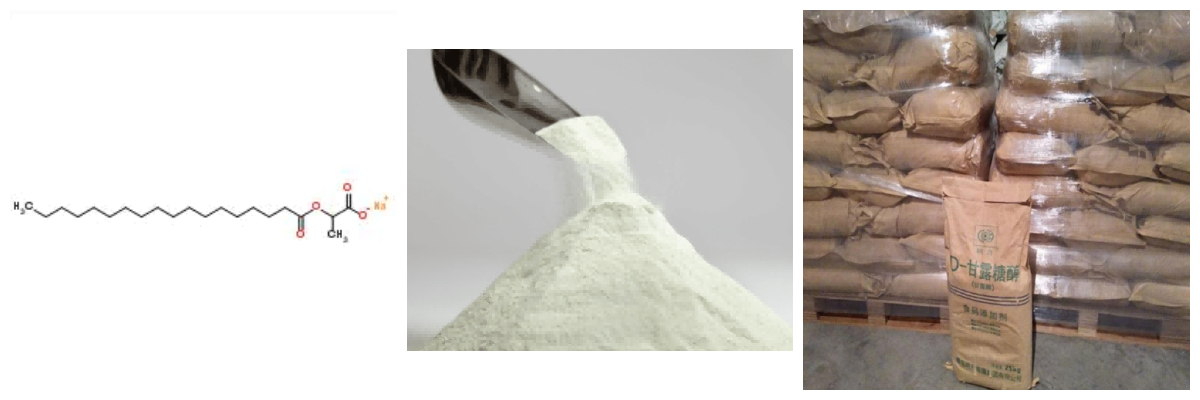
| Chemical Properties | Parameter |
|---|---|
| CAS No. | 25383-99-7 |
| E Number | E481 |
| Molecular Formula | C₂₄H₄₃NaO₆ |
| Molecular Weight | 450.59 g/mol |
| Melting Range | 46–52 ℃ |
| Acid Value | 60–80 mg KOH/g |
| Ester Value | 150–190 mg KOH/g |
| Sodium Content | 3.5%–5.0% |
| pH (aqueous suspension, 20℃) | 4.0–5.5 |
| Solubility | Dispersible in hot water, soluble in hot ethanol & hot fats/oils, insoluble in cold water |
| Decomposition Temperature | >180 ℃ |
| Appearance | Off-white to pale yellow powder / flakes |
| Odor | Faint caramel odor |
| Sensitivity | Hygroscopic |
| Storage Temp | Store below 25℃, tightly sealed |
| Stability | Stable under normal storage conditions; incompatible with strong oxidants, strong acids |
| Heavy Metal (Pb) | ≤ 2 mg/kg |
| Arsenic | ≤ 1 mg/kg |
| InChIKey | XUEZIXQZDNKQOW-UHFFFAOYSA-N |
| NIST Chemistry Reference | Sodium stearoyl lactylate (25383-99-7) |
| EPA Substance Registry System | Octadecanoic acid, 2-(1-carboxyethoxy)-1-methyl-2-oxoethyl ester, sodium salt |
| Safety Information | Details |
|---|---|
| GHS Classification | Warning |
| Hazard Statements | H315: Causes skin irritation; H319: Causes serious eye irritation |
| Precautionary Statements | P264, P280, P302+P352, P305+P351+P338 |
| Risk Statements | R36/37/38 |
| Safety Statements | S26, S36, S37/39 |
| WGK Germany | 1 |
| RTECS | WG2750000 |
| Grade | Food Grade |
| TSCA | Yes |
| HS Code | 34021100 |
| Hazard Description | Irritating to eyes, skin and respiratory tract |
| Handling Advice | Avoid dust inhalation; wear safety goggles, chemical-resistant gloves and dust mask; avoid direct contact with eyes and skin |
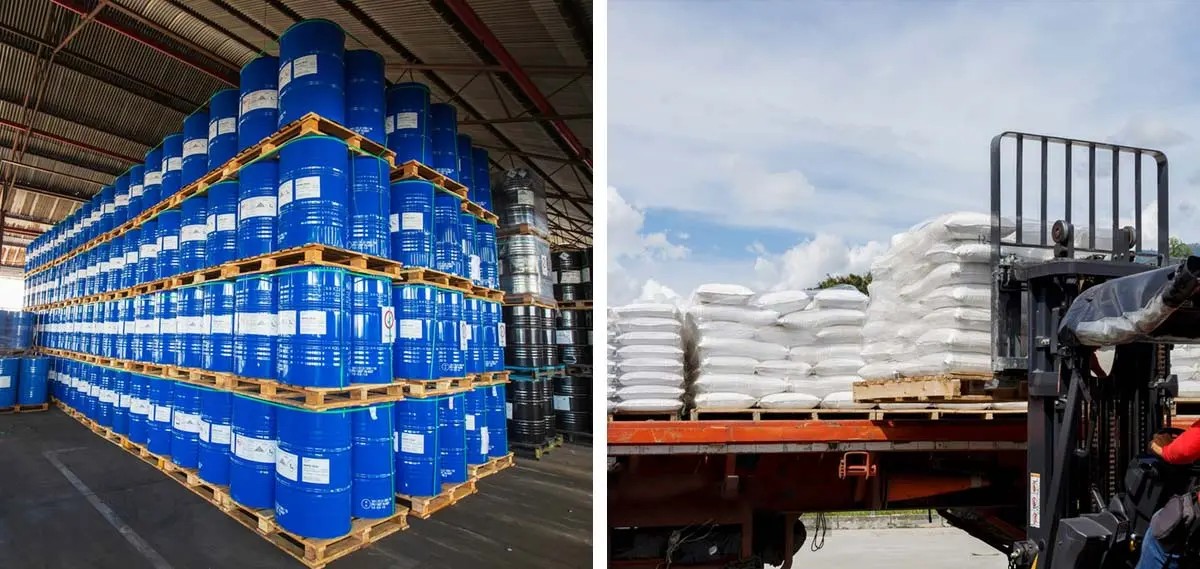
| Storage Requirement | Keep tightly sealed in cool and dry warehouse, away from direct sunlight, strong oxidants and strong acids; separate from toxic materials |
This compound is widely used in bakery products, bread, cakes, frozen dough, steamed buns, biscuits, instant noodles, fresh noodles, dairy drinks, ice cream, margarine, jam and confectionery. It improves dough elasticity, toughness and gas retention capacity, increases product volume and delays starch retrogradation to prevent staleness. It reduces noodle breakage rate and improves boiling resistance. It also acts as emulsifier and stabilizer in cosmetics and personal care products. In feed industry, it serves as feed emulsifier to promote fat digestion and absorption. It is metabolized into stearic acid and lactic acid in human body, which are natural substances, so it is safe for food application within the permitted dosage range.