


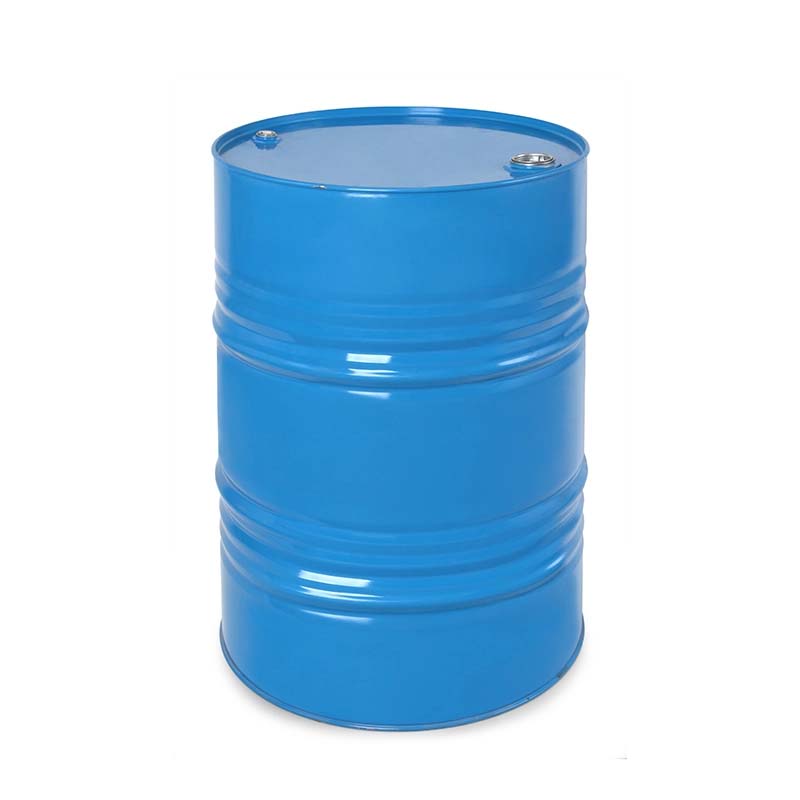

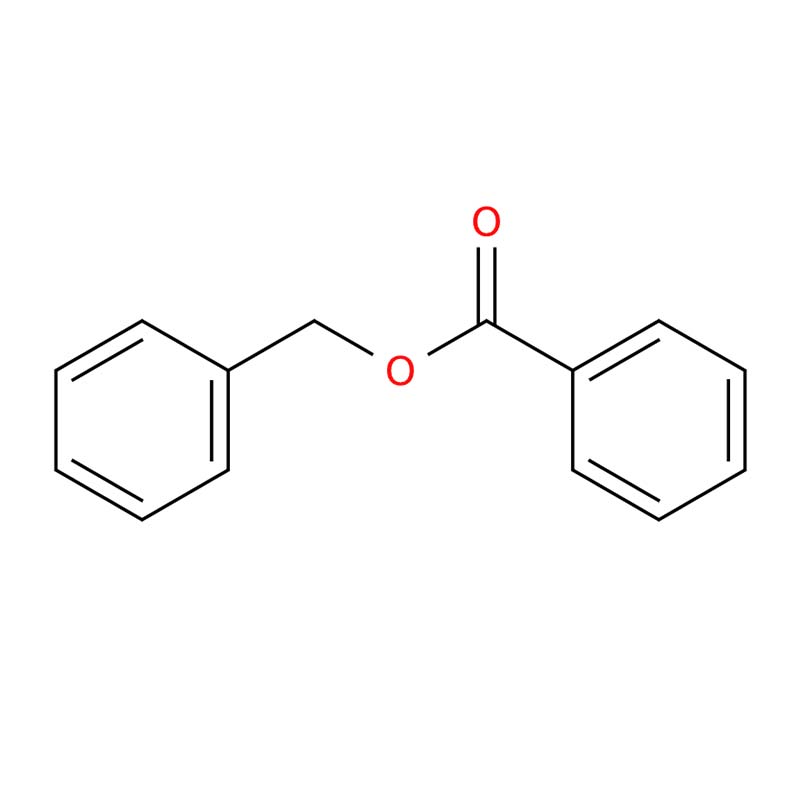
Benzyl benzoate
Effective Solvent: Benzoic benzyl ester demonstrates high solubility in organic solvents, making it well-suited for high-temperature applications and as a solvent for musks.
Low Volatility: It exhibits low volatility, ensuring consistent and stable performance across various uses without significant loss due to evaporation.
Insecticidal Efficacy: The compound acts as a potent insecticide, demonstrating high effectiveness against pests such as fleas, lice, ticks, and scabies mites—outperforming sulfur in efficacy.
Non-irritating and Non-greasy: Its non-irritating and non-greasy characteristics make it particularly suitable for pharmaceutical and fragrance formulations.
1. Product Overview
Benzyl benzoate is an organic compound belonging to the benzoate ester family. It occurs naturally in balsams such as Peru balsam, Tolu balsam, and in essential oils from flowers including jasmine, tuberose, and carnation. Commercially, it is primarily produced through chemical synthesis. Its chemical formula is C₁₄H₁₂O₂ with CAS number 120-51-4.
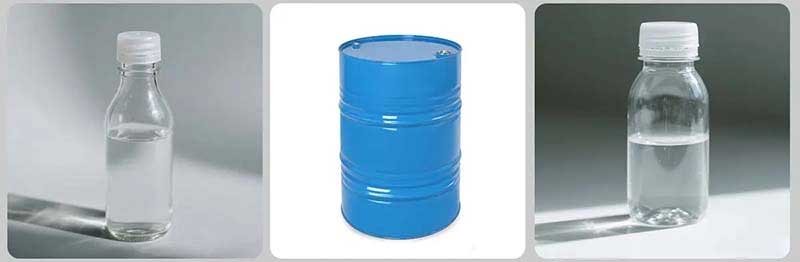
At room temperature, benzyl benzoate appears as a colorless oily liquid or white solid (melting point approximately 21°C) with a faint, pleasant, balsamic, almond-like aroma. As a versatile ester compound, it finds widespread applications across pharmaceutical, fragrance, and industrial sectors. It serves as both an effective scabicide (treatment for scabies) and acaricide, as well as an important fragrance fixative and industrial solvent.
2. Key Features
Pharmaceutical-Grade Active Ingredient: As a USP-grade raw material, it is an effective treatment for scabies (mite infestation) and pediculosis (body lice, head lice, and pubic lice).
Premium Fragrance Fixative: Possesses a delicate balsamic aroma and is widely used in both cosmetic and food flavors. It slows the evaporation rate of volatile fragrance components, extending scent longevity. An important fixative and blending agent in floral fragrances such as jasmine, lily of the valley, ylang-ylang, and gardenia.
Powerful Solvent Capabilities: Excellent solvent for musk, vanillin, and other aromatic materials. Also serves as an effective solvent and plasticizer for nitrocellulose, cellulose acetate, and other resins. Used industrially as a camphor substitute in celluloid production.
Good Formulation Compatibility: Soluble in oils, ethanol, ether, and other organic solvents; insoluble in water. Suitable for various non-polar or weakly polar formulation systems.
Multi-Industry Compliance Options: Available in multiple purity grades including high-purity industrial/reagent grade (≥99%) and USP-grade pharmaceutical grade, meeting diverse requirements of fragrance, pharmaceutical, research, and industrial manufacturing sectors.
3. Technical Specifications with Explanations
| Parameter | Typical Value/Specification | Description & Significance |
|---|---|---|
| Molecular Formula | C₁₄H₁₂O₂ | Core identifier for chemical structure. |
| Molecular Weight | 212.25 g/mol | Used for quantitative analysis and formulation calculations. |
| CAS Number | 120-51-4 | Universal chemical substance identifier. |
| Appearance | Colorless oily liquid or white solid (below 21°C) | Visual quality indicator. Clear liquid above melting point; solid below melting point. |
| Odor | Faint, pleasant, balsamic, almond-like | Sensory characteristic critical for fragrance applications. |
| Assay (Purity) | ≥99.0% (GC) to 100.5% (USP grade) | Core specification. High purity ensures pharmaceutical efficacy and fragrance quality. USP grade: 99.0-100.5%. |
| Melting Point | 18.0°C - 21.0°C | Characteristic physical constant. Physical state changes around this temperature range; important for storage and shipping. |
| Boiling Point | 323°C - 324°C | High boiling point suitable for high-temperature processes, minimizing evaporation loss. |
| Flash Point | > 146°C - 158°C (closed cup) | High flash point indicates relatively low fire risk, but remains combustible; keep away from open flames. |
| Density | 1.118 g/mL (20°C) | Slightly heavier than water; used for volume-to-weight conversions. |
| Refractive Index | 1.5680 - 1.5700 (20/D) | Optical property used for purity verification and quality control. |
| Solubility | Insoluble in water; soluble in ethanol, ether, chloroform, and other organic solvents | Determines application systems. Requires non-aqueous or mixed solvent systems. |
| Viscosity | 10.9 mPa·s (25°C) | Low viscosity facilitates pumping and mixing. |
| Log Pow | Approximately 3.97 - 4.0 | High lipophilicity indicates potential for accumulation in biological fatty tissues. |
| Acidity | ≤ 0.3 mg KOH/g | Controls free acid content, ensuring product quality and stability. |
4. Applications
Pharmaceutical & Veterinary Medicine
Human Medicine: Used as a scabicide primarily for treating scabies (caused by Sarcoptes scabiei). It acts on the mite's nervous system, causing paralysis and death. Also effective against body lice, head lice, and pubic lice.
Veterinary Medicine: Used for treating ectoparasitic infections including mange and lice in pets and livestock.
Pharmaceutical Excipient: Used in formulations for whooping cough and asthma preparations.
Fragrance & Flavor Industry
Fixative: Serves as a fragrance fixative, slowing aroma evaporation and extending scent longevity. Widely used in cosmetic fragrances including jasmine, lily of the valley, ylang-ylang, gardenia, tuberose, and lilac.
Food Flavoring: Used in formulating fruit flavors such as strawberry, pineapple, and cherry, as well as in beverage flavors.
Solvent & Diluent: Acts as solvent and diluent for high-viscosity synthetic aromatics such as musk and vanillin.
Industrial Solvent & Plasticizer
Resin Solvent: Solvent for nitrocellulose, cellulose acetate, celluloid, and other resins.
Plasticizer: Used as plasticizer, particularly in combination with diethyl phthalate or dibutyl phthalate for nitrocellulose-resin mixtures, improving material flexibility and processability.
Camphor Substitute: Used as a camphor substitute in celluloid production.
Research & Laboratory Applications
Tissue Clearing: Used in preparing benzyl alcohol/benzyl benzoate (BABB) solution for light sheet fluorescence microscopy (LSFM) imaging and immunohistochemistry, enhancing tissue transparency.
Behavioral Studies: Used in olfactory response studies with Drosophila larvae.
Other Applications
Insect Repellent: Used as an insect repellent.
Textile Auxiliaries: Component in certain textile auxiliary formulations.
5. Product Grade Comparison
| Parameter/Grade | Industrial/Reagent Grade (≥99%) | Pharmaceutical Grade (USP) | High Purity/Refined Grade | Analytical Standard/Solution |
|---|---|---|---|---|
| Core Standard | Meets general industrial/lab requirements | Meets United States Pharmacopeia (USP) standards | ≥99%, refined, high purity | 10 mM in DMSO, etc. |
| Assay (Content) | ≥99.0% | 99.0% - 100.5% | ≥99%, refined grade | Exact concentration |
| Critical Parameters | Assay, acidity, refractive index | Assay, related substances, heavy metals, GMP manufacturing | Assay, color, odor | Exact concentration, sterility |
| Primary Applications | Industrial solvent, plasticizer, lab synthesis, fragrance diluent | Human medicine (scabies treatment), veterinary medicine, pharmaceutical excipient | Premium fragrances, precision research, tissue clearing (BABB method) | Analytical testing, instrument calibration, pharmacological research |
| Packaging | 250 mL, 1 L, 5 L glass bottles or plastic containers | 500 mL amber glass bottles | 100 mL, 250 mL, 500 mL | 1 mL ampoules or vials |
| Storage Conditions | Cool, ventilated, protected from light | Cool, ventilated, protected from light | Cool, ventilated, protected from light | -80°C freezing, dry ice shipping |
6. Purchasing & Selection Guide
Select by Application Area
Pharmaceutical Manufacturers/Pharmacies: Must select Pharmaceutical Grade (USP). Request Certificate of Analysis (COA) meeting USP standards and verify production in FDA-registered cGMP facilities.
Fragrance & Flavor Manufacturers: For premium perfumes or food flavors, choose High Purity/Refined Grade or Reagent Grade (≥99%) with careful attention to color and odor purity to avoid fragrance alteration.
Industrial Users (plastics, coatings): Industrial Grade (≥99%) provides cost-effective performance for solvent and plasticizer applications.
Research Laboratories: Select based on specific application:
Tissue clearing experiments: High Purity Grade
Analytical standards: Analytical Standard/Solution
Monitor Physical Form & Storage Conditions
Benzyl benzoate melts at 18-21°C. During cold shipping or storage, product may solidify into a white solid. This is a normal physical change; before use, warm slowly (e.g., in 25-30°C water bath) and mix thoroughly. Quality remains unaffected.
Standard solutions (e.g., 10 mM in DMSO) require -80°C freezer storage and dry ice shipping to maintain stability.
Regulatory Compliance Verification
As a pharmaceutical ingredient, must meet target market pharmacopoeia standards (USP, Ph.Eur., BP) and Good Manufacturing Practices (GMP).
For fragrance applications, must comply with IFRA (International Fragrance Association) standards and local food additive regulations.
Safety & Handling Precautions
Harmful if swallowed (H302).
Toxic to aquatic life with long-lasting effects (H411).
Wear protective gloves, protective clothing, and eye protection (P280).
Avoid release to the environment (P273).
7. Frequently Asked Questions (FAQ)
Q: Is benzyl benzoate a solid or liquid at room temperature?
A: It depends on ambient temperature. Its melting point is 18-21°C. Above 22°C in warm environments, it is a colorless oily liquid. Below its melting point in cold environments (e.g., winter shipping or storage), it solidifies into a white crystalline solid. This is normal—simply warm to 25-30°C before use, melt slowly, and mix thoroughly. Quality remains unaffected.
Q: What is benzyl benzoate primarily used for clinically?
A: It is primarily used as a scabicide for treating scabies, a contagious skin infection caused by the itch mite (Sarcoptes scabiei). It is also effective against body lice, head lice, and pubic lice.
Q: What role does benzyl benzoate play in fragrances?
A: It serves two main functions: 1) Fixative—its high boiling point and slow evaporation slow the release of more volatile fragrance components, extending scent longevity; 2) Solvent and diluent—dissolves high-viscosity aromatic materials like musk and vanillin, facilitating fragrance formulation.
Q: Is benzyl benzoate safe? What are the risks?
A: At recommended doses and usage conditions (e.g., topical scabies lotions), it is considered safe. However, potential risks include:
Toxicity: Harmful if swallowed (H302)
Irritation: May cause eye, skin, and respiratory tract irritation; potential dermatitis
Skin absorption: Can be absorbed through skin
Environmental impact: Toxic to aquatic life; avoid environmental release
Pediatric use: Use with caution in infants and children; dilute appropriately to minimize skin irritation
Q: What special research applications does benzyl benzoate have?
A: In biomedical research, it is widely used for tissue clearing. When combined with benzyl alcohol as BABB solution, it renders tissue samples (e.g., mouse organs, embryos) transparent, enabling deep three-dimensional imaging with light sheet fluorescence microscopy (LSFM).
8. Delivery, Certification & Service
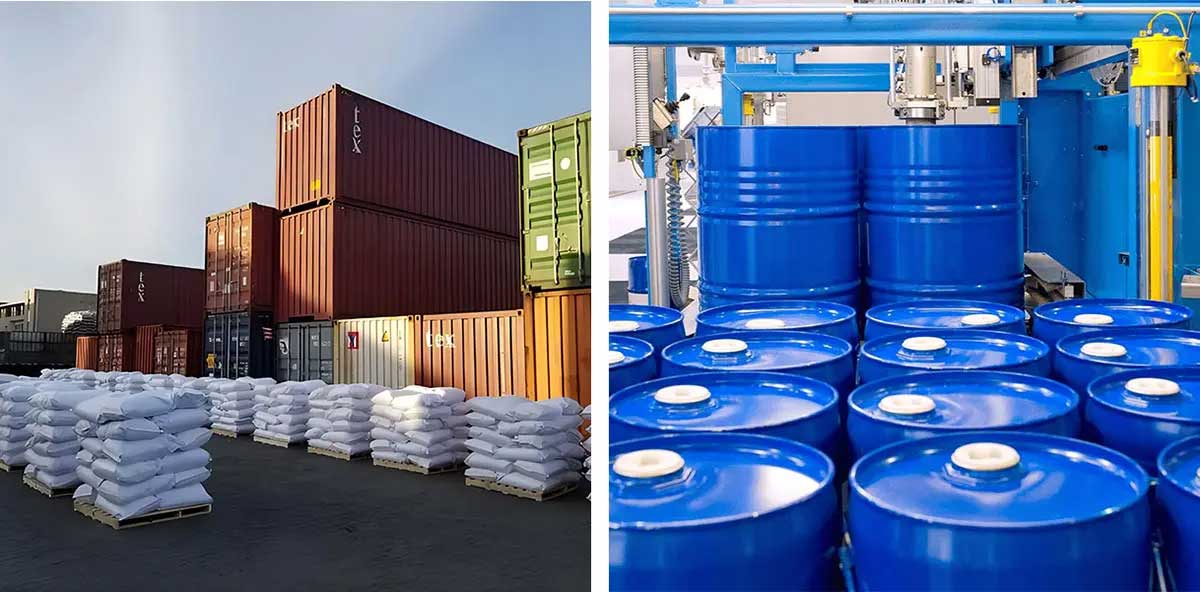
Delivery Capabilities
Inventory Status: Common sizes (250 mL, 500 mL, 1 L) available from regional warehouses for rapid dispatch. Bulk quantities (5 L) require advance confirmation.
Sample Program: Small samples (e.g., 100 mL) available for research institutions and manufacturers for formulation testing and evaluation.
Packaging Options:
Research quantities: 100 mL, 250 mL, 500 mL glass or amber glass bottles
Industrial quantities: 1 L, 5 L glass bottles or plastic containers
Analytical standards: 1 mL ampoules or vials with specified storage conditions
Custom packaging: Available for volume customers
Shipping:
Standard products: Non-hazardous material; standard freight shipping
Standard solutions (e.g., 10 mM in DMSO): Dry ice shipping required; store at -80°C immediately upon receipt
Quality Certifications
ISO 9001:2015 certified manufacturing facilities (grade dependent)
Pharmaceutical Grade (USP) produced, packaged, and stored according to cGMP (current Good Manufacturing Practices) in FDA-registered and inspected facilities
Certificate of Analysis (COA) provided with each batch, documenting appearance, assay, refractive index, acidity, specific gravity, and other critical parameters
Safety Data Sheet (SDS) available in multiple languages
Third-party test reports (e.g., SGS) available upon request
Technical Support & Services
Technical Consultation: Chemist and application specialist team available for online consultation on product selection, dissolution, formulation optimization, process adaptation, and regulatory compliance
Custom Services: Tailored purity specifications and packaging options for long-term partnership customers
Regulatory Support: Documentation packages for product registration in target markets, including Drug Master File (DMF) support for pharmaceutical excipients
Documentation Available
Certificate of Analysis (COA)
Safety Data Sheet (SDS/MSDS)
Technical Data Sheet (TDS)
Specification and compliance statements
USP-grade pharmaceutical excipient documentation
cGMP compliance statement